Things to Do in Yellowstone National Park (What to See, Where to Stay + Tips)
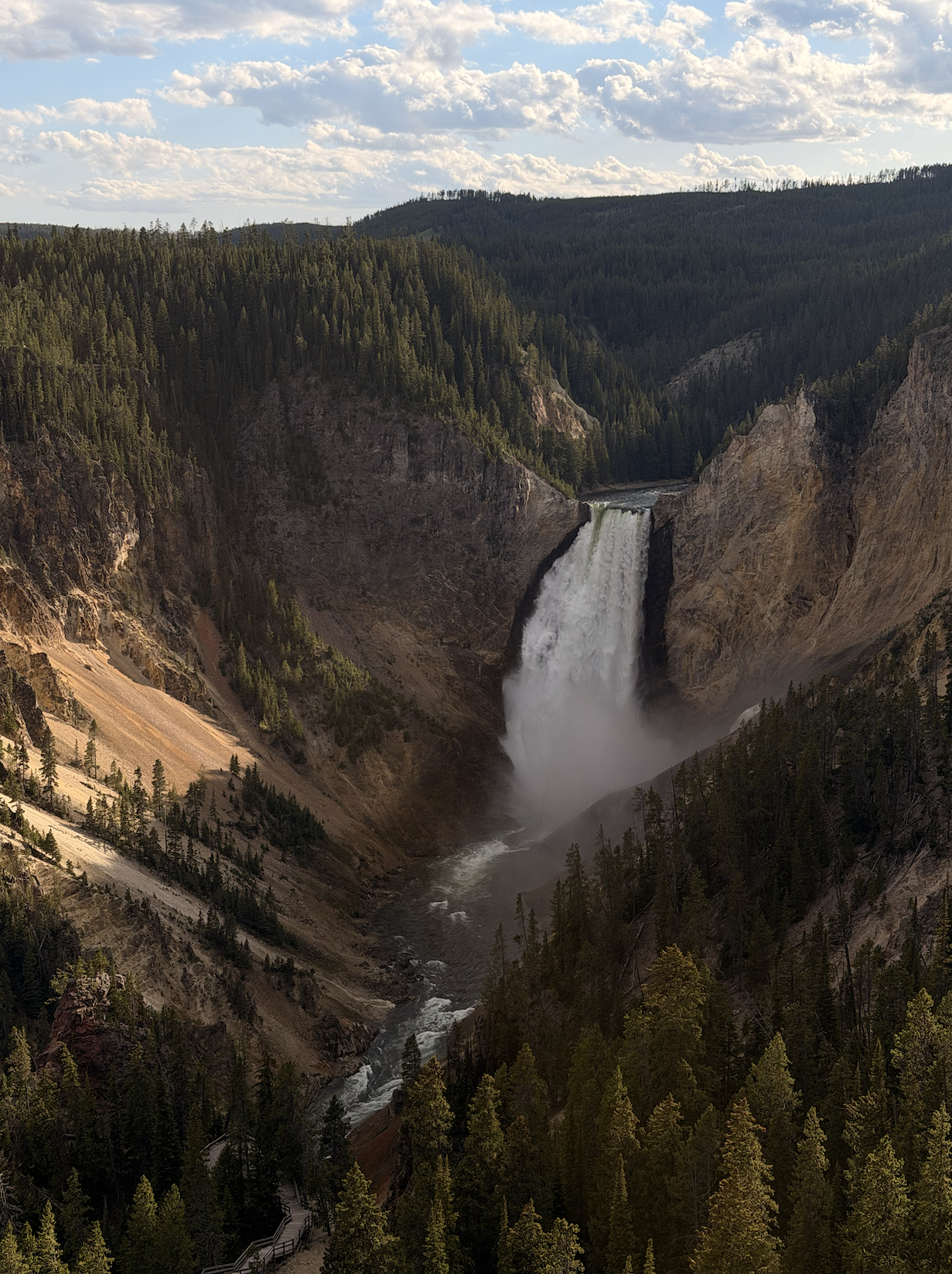
If there’s one national park that genuinely lives up to the hype, it’s Yellowstone. I’ve been twice now — once in 2021 and again just this summer — and both times I left wondering why I don’t go every year.
Getting here from Phoenix is easier than most people think. I flew into Bozeman, MT (about a 2-hour flight), rented a car, and was inside the park in under 2 hours. No 5-hour drive, no overnight stop. Just fly in, grab your rental, and go. Wherever you’re coming from, this post is for you!
Here’s everything you need to know — the best things to see, where to stay, and the specific timing tips that made my second trip even better than my first.
Last Updated: June 2026
Quick Facts About Yellowstone
Yellowstone is massive, and a little pre-trip knowledge goes a long way. Here’s what to know before you arrive so you’re not figuring it out at the entrance gate.
- Closest airports: Bozeman Yellowstone International (BZN) is the most popular — about 90 minutes to the North Entrance or West Yellowstone. Jackson Hole Airport (JAC) works well if you’re combining with Grand Teton.
- How many days do you need? 2 days minimum; 3 is the sweet spot
- Entry fee: $35/vehicle for 7 days — or use your America the Beautiful pass
- Cell service: Minimal inside the park. Download offline maps before you go.
- Gas: Fill up before entering — gas inside the park is available but expensive
- Reservations: Camping inside the park books up months in advance. Plan ahead.
- Park size: Larger than Delaware and Rhode Island combined — plan your days by area of the park, not by individual attraction
Best Things To Do in Yellowstone
Yellowstone has a way of overwhelming first-time visitors — there’s almost too much to see. These are the stops that are genuinely worth your time, plus the specific tips that make each one better.
Walk the South Rim of the Grand Canyon of Yellowstone to Artist Point
The Grand Canyon of Yellowstone is one of those places that stops you in your tracks. The canyon walls are a deep yellow and orange, the river is turquoise far below, and the Lower Falls drop 308 feet right in front of you. Artist Point is the classic viewpoint and the one you’ve seen in every photo.
Here’s the tip that made all the difference on my most recent trip: go between 7–9pm. We visited in the early evening and had the canyon almost entirely to ourselves. The golden light at that hour makes the walls glow, and you can actually stand at the railing and take it in without fighting a crowd. During the day this spot is packed — save it for sunset.
To get here, take South Rim Drive south of Canyon Village. Park at the first lot near the South Rim Trailhead and walk 1.5 miles to Artist Point along the rim. You could also choose to park all the way by Artist’s Point to avoid the hike. One of the most beautiful parts of the park to me is the bench (below) at Artist’s Point. Just wow.
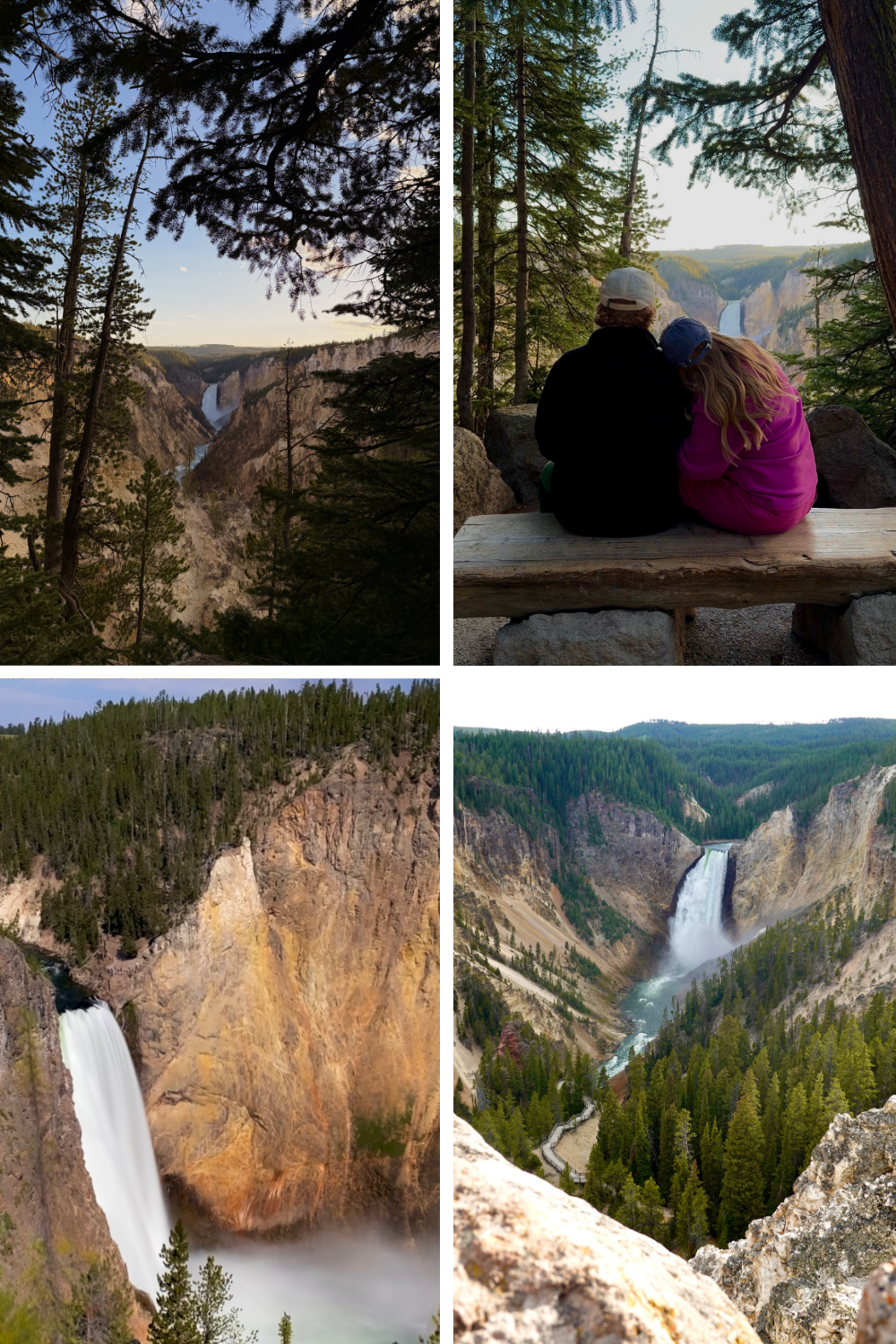
South Rim Viewpoints
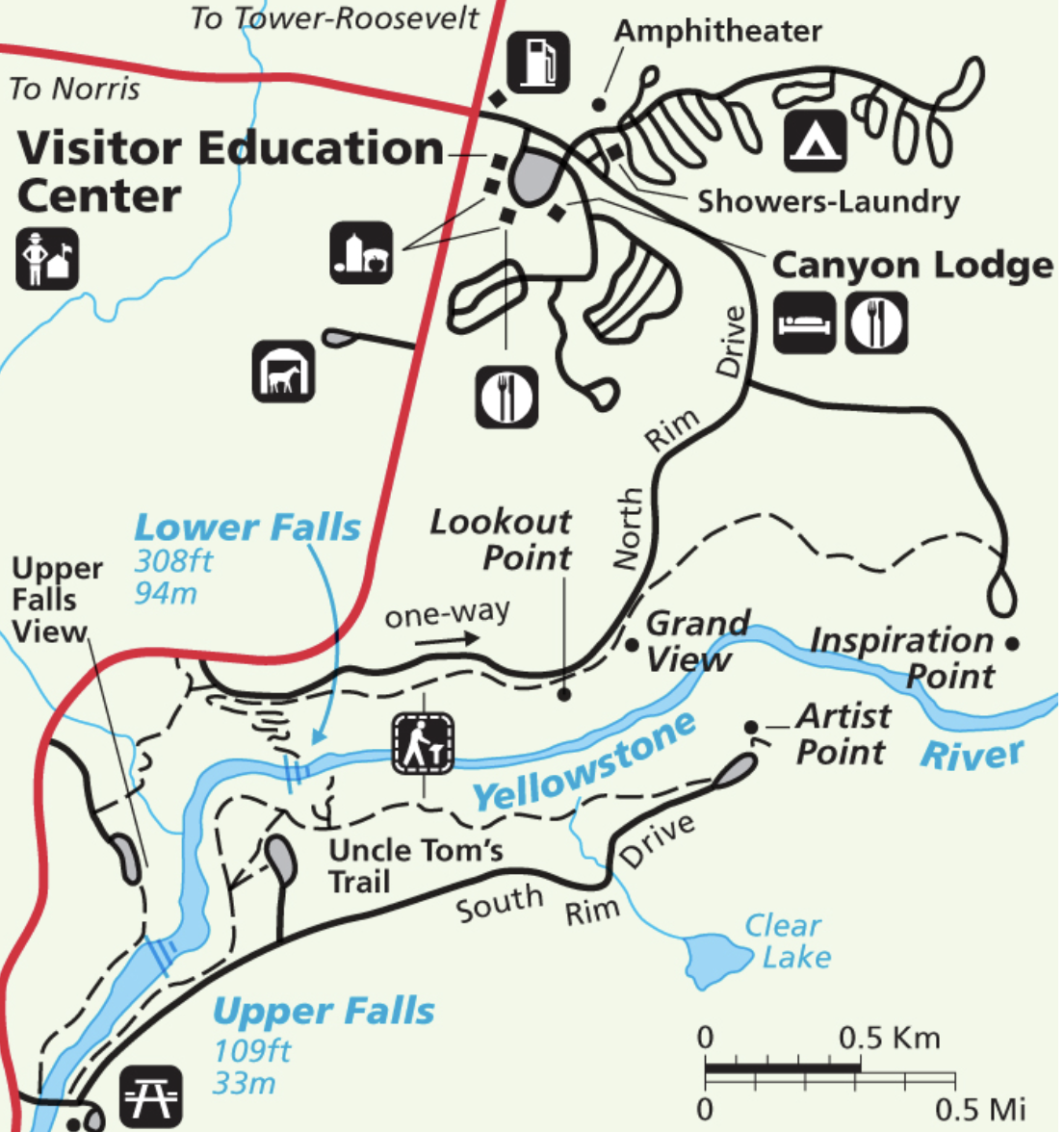
The South Rim has four distinct stops worth knowing about. Park at the Upper Falls lot and walk the South Rim Trail all the way to Artist Point rather than driving between them — the walk itself has great canyon views and takes about 30–40 minutes. Uncle Tom’s Trail is worth doing if it’s open (it closes periodically for maintenance — check NPS.gov before you go). Save Artist Point for last, and go in the evening if you can.
- Upper Falls View — Start here. Quick walk from the parking lot with a great first look at the Upper Falls dropping into the canyon.
- Uncle Tom’s Trail — A steep staircase trail dropping 328 steps toward the base of the Lower Falls. One of the most dramatic perspectives in the park — do it if it’s open.
- South Rim Trail — The 1.5-mile path connecting the parking area to Artist Point. Walk this instead of driving between stops.
- Artist Point — The classic viewpoint. Lower Falls and the full canyon in one frame. Go 7–9pm to beat the crowds and catch the golden light on the canyon walls.
Explore the North Rim of the Grand Canyon of Yellowstone
The North Rim is a completely different experience from the South Rim — instead of sweeping canyon panoramas, you’re right at the edge of the action. The Yellowstone River is turquoise and roaring below you, the mist hits your face, and the canyon walls drop away dramatically in both directions. Do both rims if you can — they’re not redundant, they’re genuinely different perspectives.
Stand at the Brink of Upper and Lower Falls
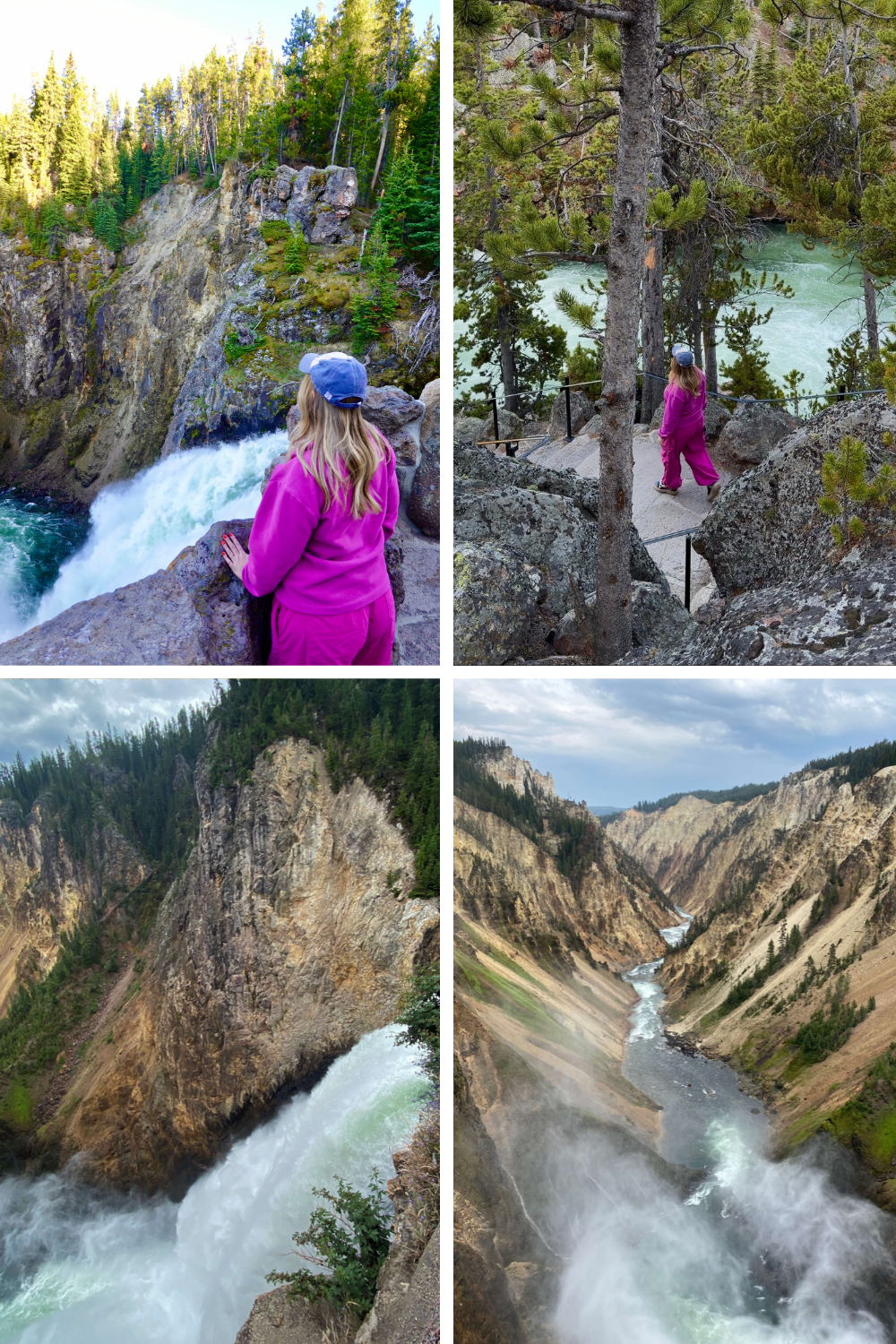
The Brink of the Upper Falls puts you right at the lip of the falls as the river disappears over the edge. It’s a short walk from the parking area and one of those spots that doesn’t fully make sense until you’re standing there. After Upper Falls, head to the Brink of the Lower Falls — the trail drops 265 feet over 0.7 miles down to a platform directly above a 308-foot freefall. You can feel the mist and hear the roar before you even see it. Your legs will feel the climb back up — completely worth it. The top 2 photos below are from the Upper Falls Brink, and the bottom 2 photos are from the Lower Brink.
Check Out Other North Rim Viewpoints
From North Rim Drive you can hit four overlooks, each giving you a different angle on the falls and canyon. You can drive between them or walk the North Rim Trail connecting them all — if you have the energy, walk it. You see far more and avoid the parking shuffle entirely.
- Lookout Point — Great overall view of the Lower Falls and canyon together. Short walk from the parking lot and one of the most photographed spots on the North Rim. Arrive before 10am or parking fills up. MY FAVORITE (below).
- Grand View — A wide canyon panorama without the waterfall front and center — a different perspective worth 10 minutes of your time. Connected to both Lookout Point and Inspiration Point by trail.
- Inspiration Point — At the far east end of the North Rim, this one looks back down the full length of the canyon. Especially beautiful at sunrise and less crowded than Lookout Point.
Visit Grand Prismatic Spring
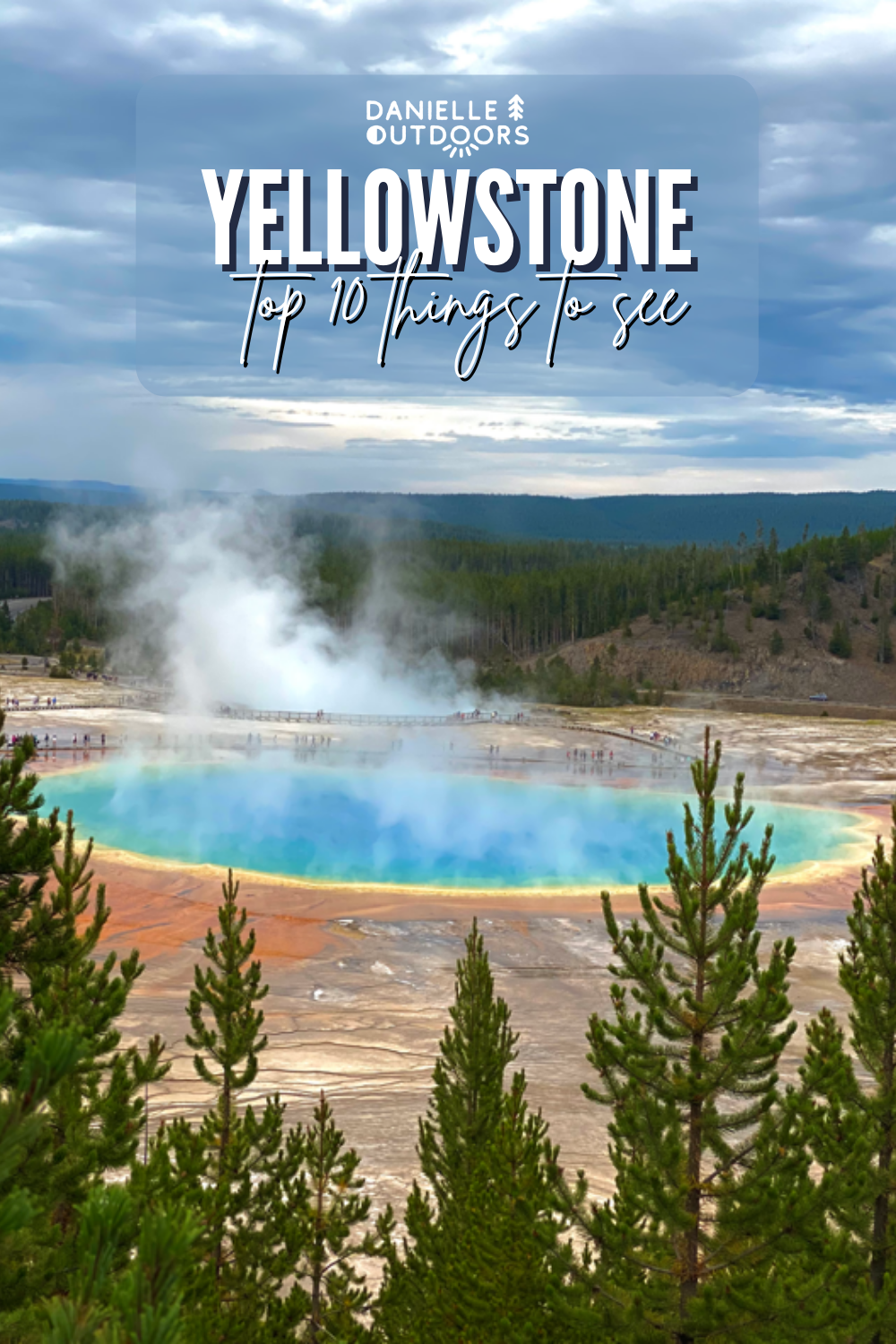
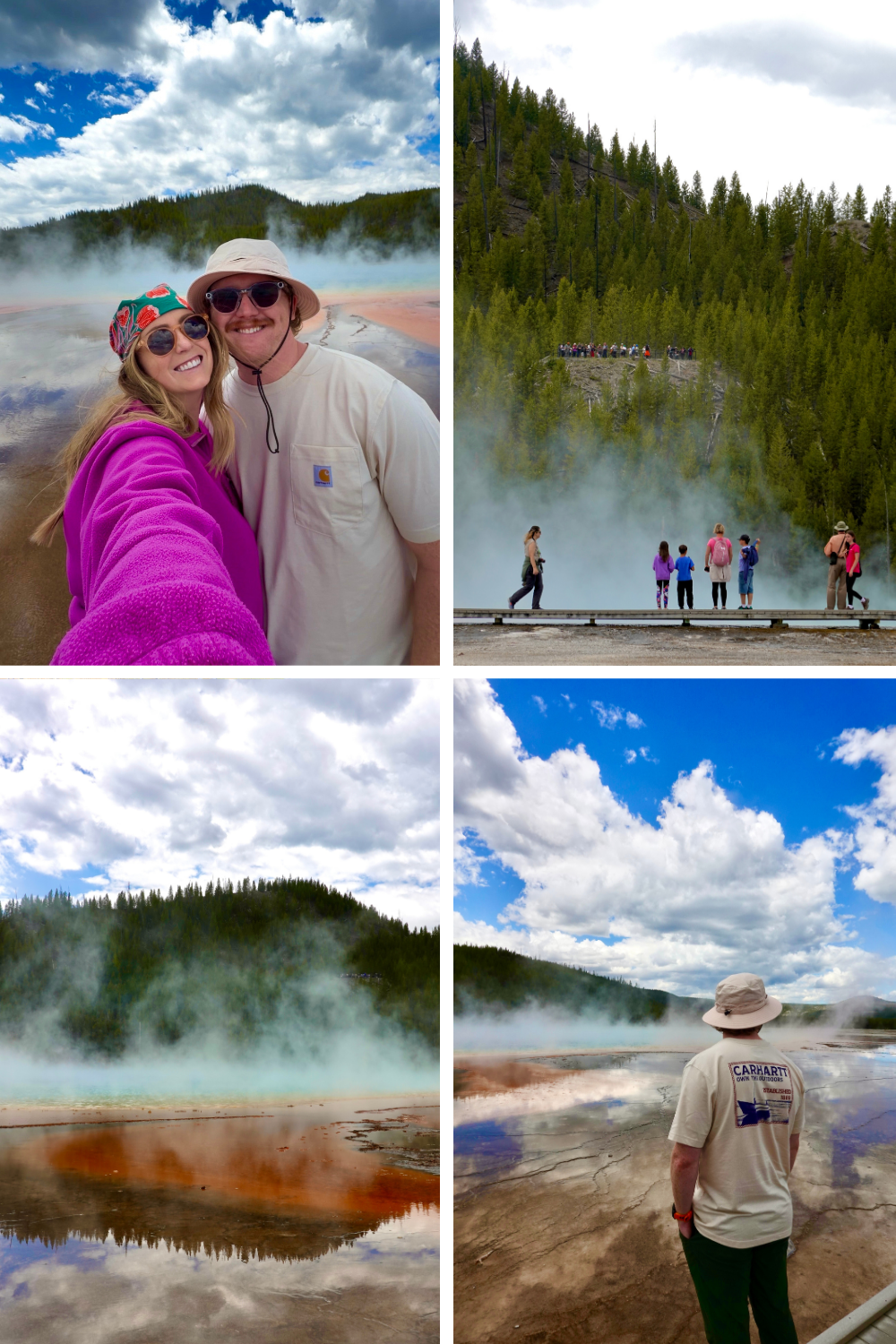
Grand Prismatic is the largest hot spring in the United States and the third largest in the world. The colors — deep blue center fading into turquoise, green, yellow, and orange at the edges — come from heat-loving bacteria living in the mineral-rich water. There is genuinely nothing else that looks like it.
You can experience it two ways and I’d recommend doing both if you have time — they’re completely different.
See it Up Close
Head to the main parking lot in the Midway Geyser Basin off Firehole Lake Drive. One pro tip: enter from the north. It’s much easier to turn right into the lot than navigate the left-turn lane coming from the south. Walking the boardwalk gets you right alongside the spring — the steam rolling off 160°F water feels incredible on a cool morning, and the scale of it is hard to grasp until you’re standing next to it. This area can be REALLY busy, FYI.
See it From Above
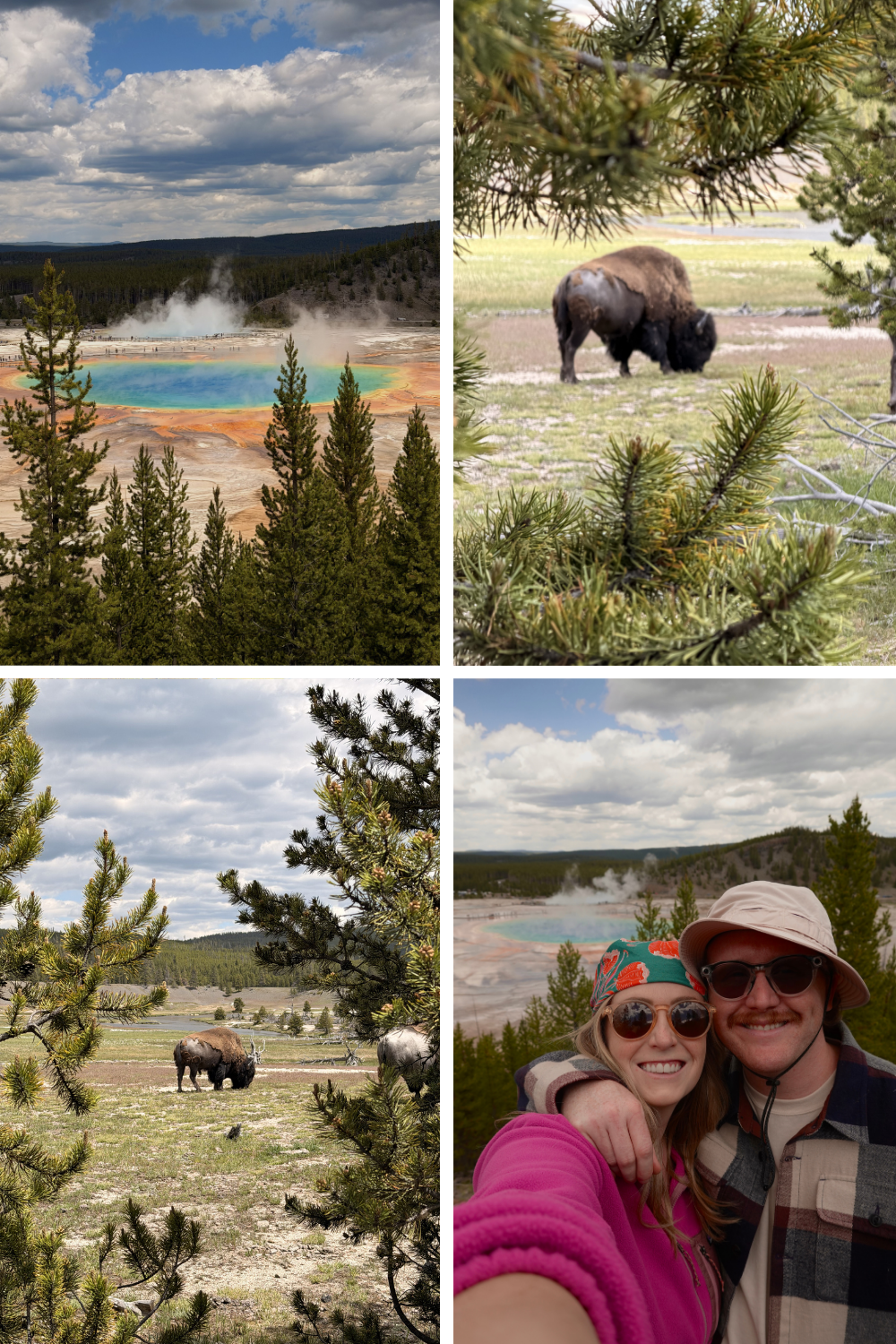
The Grand Prismatic Overlook Trail is 1.6 miles round trip with 200 feet of elevation gain, starting from the parking lot just south of the spring. This is the vantage point you’ve seen in photos — the full rainbow of colors spread out below you. It’s rated easy and takes about 45 minutes round trip. We saw lots of bison here!
Tip: Do the boardwalk first, then drive south to the overlook trailhead and hike up. You get both perspectives in about 90 minutes total.
Watch Old Faithful Erupt
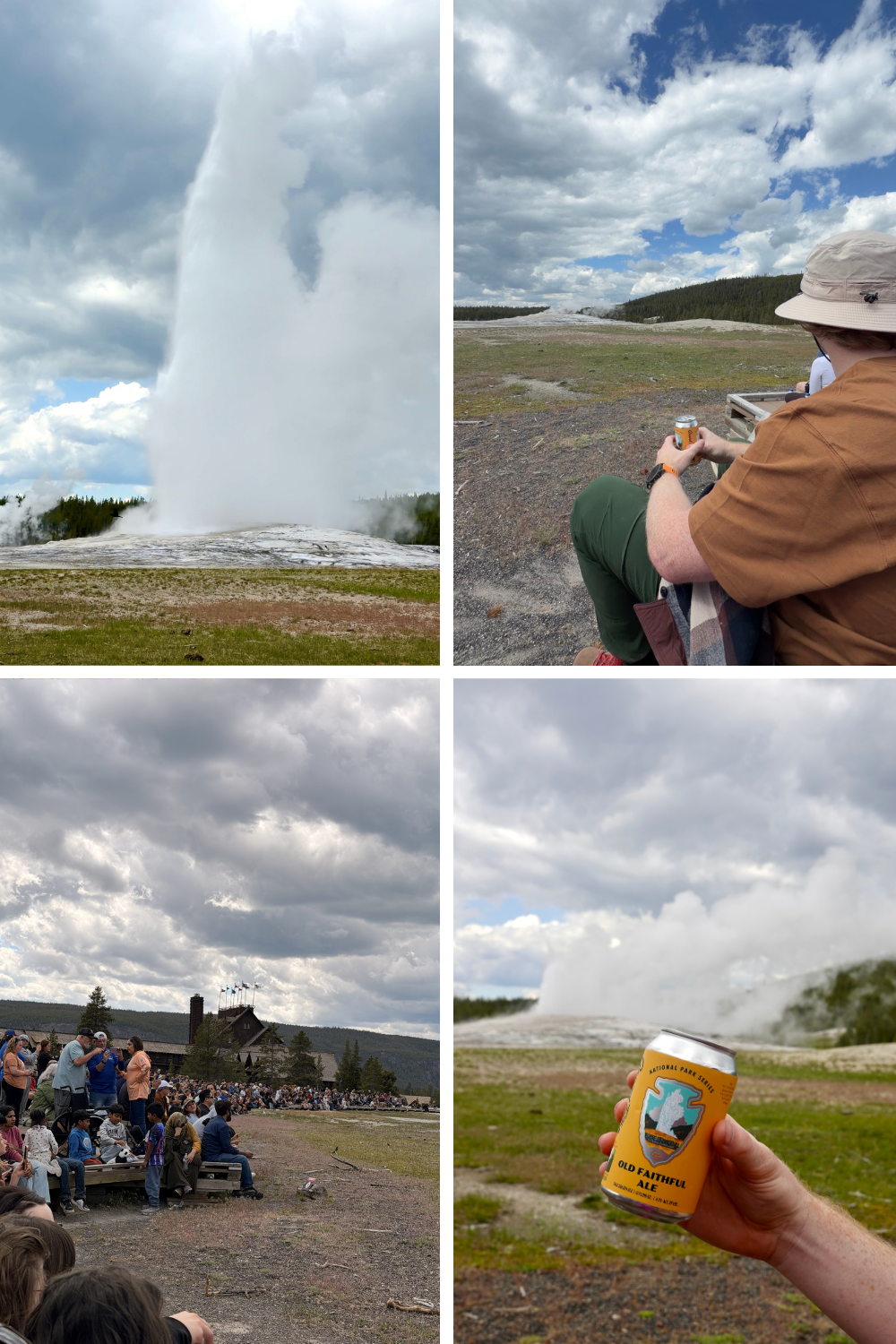
You have to see Old Faithful — it’s the most famous geyser in the world for a reason. It erupts every 60–110 minutes, shoots over 150 feet in the air, and has been doing it reliably since before Yellowstone was even a national park. It’s one of those things that sounds touristy until you’re standing in front of it and the ground starts rumbling.
Here’s what I learned on my second trip: arrive 30–45 minutes before a predicted eruption if you want a front row spot. We got there early, grabbed seats right at the front railing, and it was worth every minute of waiting. The crowd builds fast and latecomers end up watching from far back. Check predicted eruption times at any Visitor Center the day before — they’re usually accurate within 10 minutes.
After the eruption, walk through Old Faithful Inn right next door. It’s one of the largest log structures in the world, built in 1904, and the interior is stunning — a seven-story log lobby with a massive stone fireplace in the center. Worth 20 minutes even if you’re not staying there.
Tip: Old Faithful is also beautiful at sunset. If your timing works out, an evening eruption with the light fading behind the geyser is hard to beat.
How Often Does Old Faithful Erupt?
Old Faithful erupts approximately every 60–110 minutes, with each eruption lasting 1–5 minutes. The interval between eruptions actually depends on how long the previous eruption lasted — a longer eruption means a longer wait for the next one. Rangers use this pattern to predict eruption times, typically accurate within 10 minutes. Check the predicted times posted at any Visitor Center or the Old Faithful Visitor Education Center the day before you plan to go.
See Wildlife in Lamar Valley
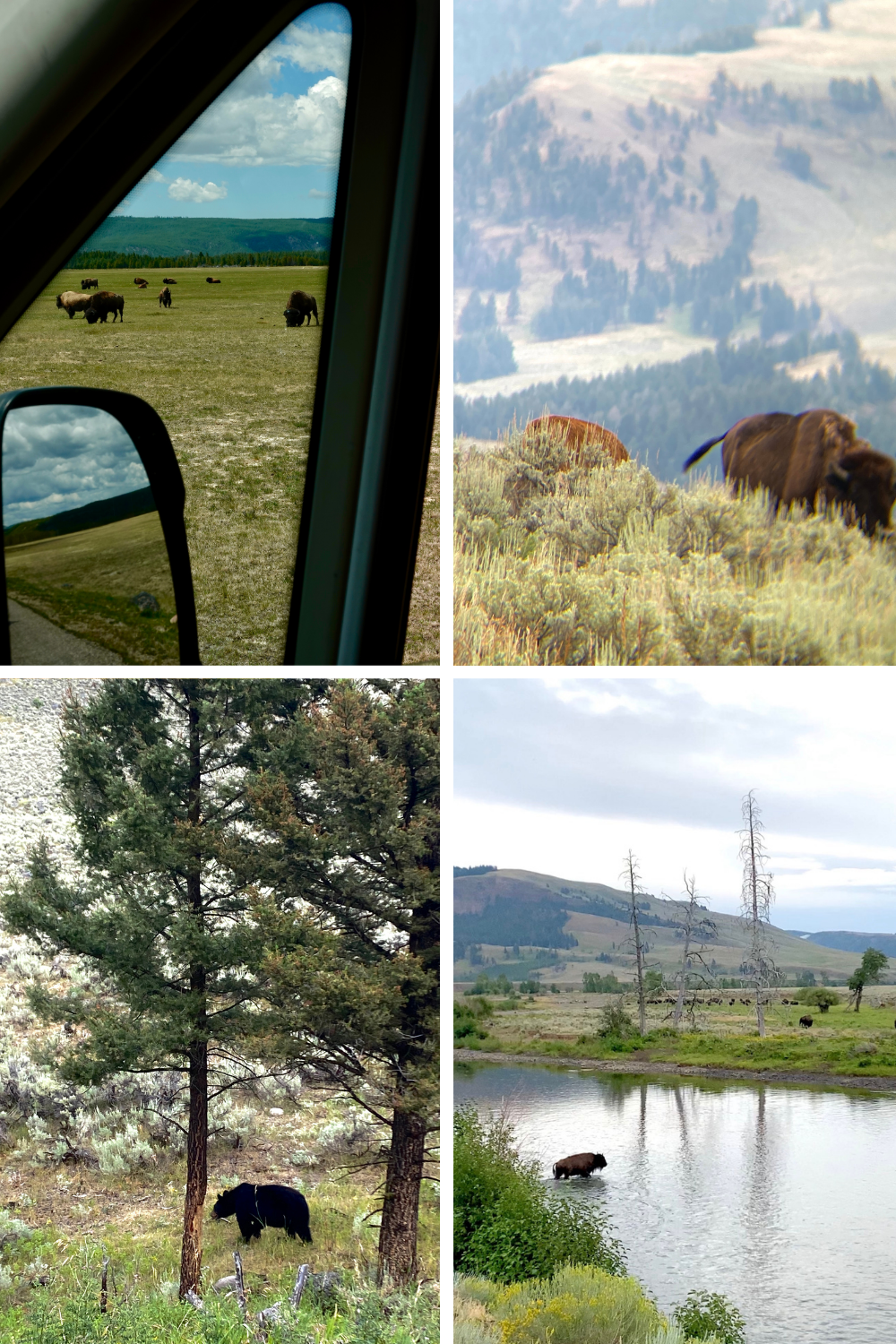
Lamar Valley is in the northeast corner of the park and it’s the single best place in the lower 48 states to see large wildlife in their natural habitat. It’s often called the “Serengeti of North America” — and once you’ve been, you’ll understand why. On our trip we saw bison everywhere, and on my first visit we spotted elk and a black bear. Wolf sightings are also possible here — Yellowstone has one of the most successful wolf reintroduction programs in the country.
The valley is wide and open, which means animals are sometimes at a distance. Bring binoculars if you have them. The best strategy is simple: slow down and follow what other cars are doing. A cluster of pulled-over vehicles with cameras out the window means someone found something good — pull over and look.
Best time to go: Early morning (6–8am) or evening. Midday the animals tend to rest and are harder to spot.
What you might see: Bison, elk, black bear, grizzly bear, wolves, pronghorn, bald eagles, and river otters depending on the season.
Important: Never approach wildlife. Bison look slow but can run 35 mph and are responsible for more injuries in Yellowstone than any other animal. Stay at least 25 yards from bison and elk, and 100 yards from bears and wolves.
Walk the Boardwalk at Norris Geyser Basin
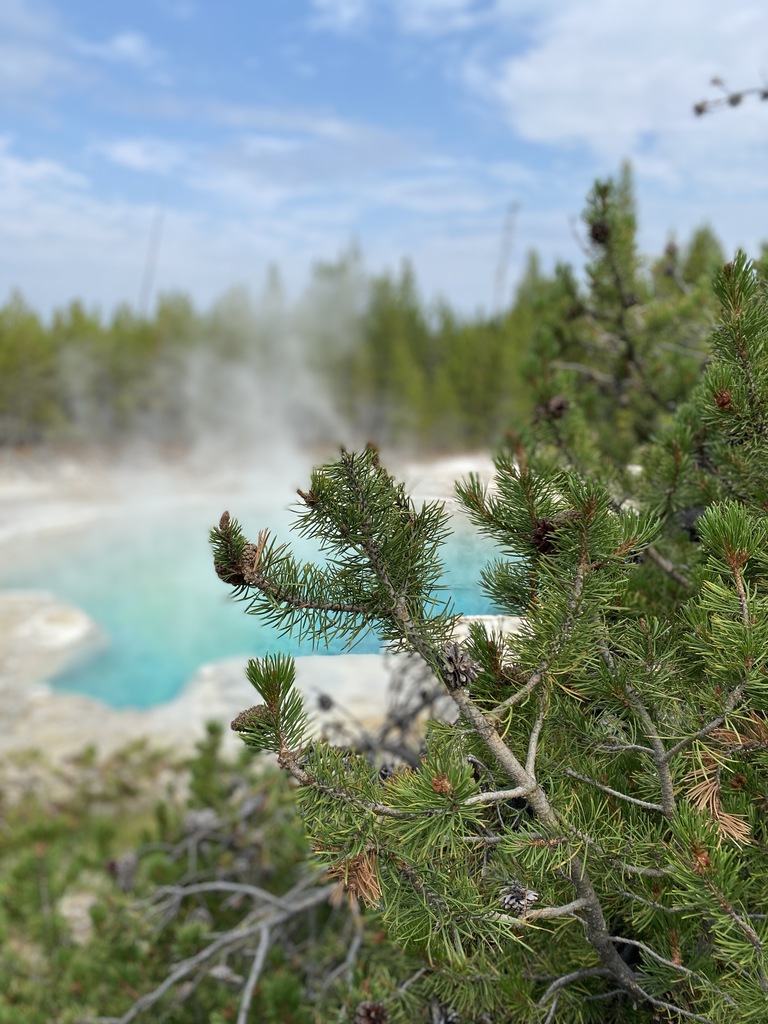
Norris Geyser Basin is the hottest and most dynamic thermal area in Yellowstone — and honestly one of the most underrated stops in the park. Most visitors beeline for Old Faithful and Grand Prismatic and skip Norris entirely. Don’t make that mistake.
The basin has two sections connected by a 2.9-mile loop of boardwalks: Porcelain Basin and Back Basin. You don’t need to do the full loop — a half mile out to Steamboat Geyser and back gets you the highlight of the basin and is worth every minute.
Drive Through Roosevelt Arch
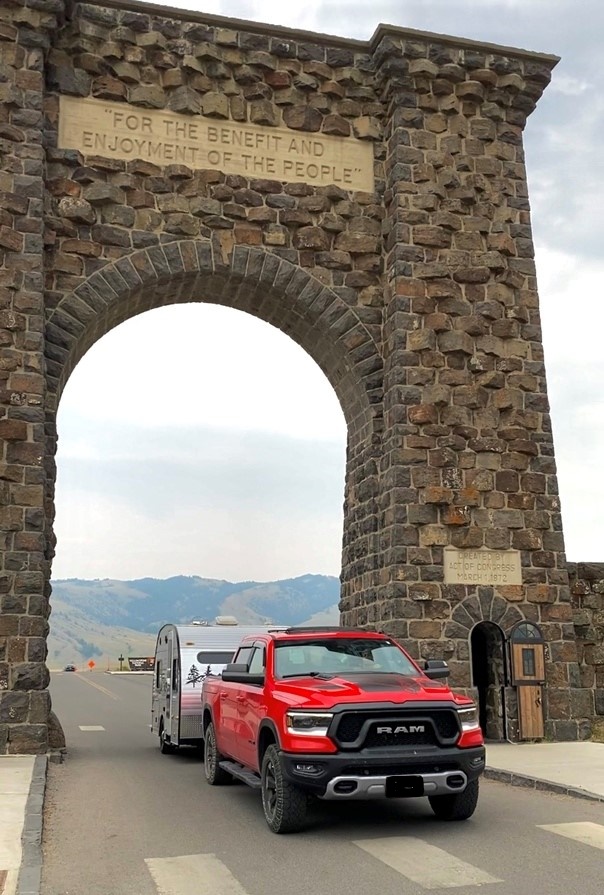
The Roosevelt Arch marks the original north entrance to Yellowstone and is one of those stops that’s easy to overlook on a map but genuinely worth a few minutes of your time if you’re in the area. It was built in 1903 and dedicated by President Theodore Roosevelt himself, with the inscription “For the Benefit and Enjoyment of the People” carved into the stone — the same words that guided the establishment of Yellowstone as the world’s first national park in 1872.
The arch sits just outside the North Entrance near Gardiner, MT. If you’re staying in the Mammoth area or planning to do the whitewater rafting in Gardiner, it’s a natural stop — you’ll drive right past it. I wouldn’t make a special trip across the park just for this, but if you’re nearby it takes all of five minutes and makes for a great photo.
Tip: Pull over in Gardiner before driving through and get a photo from the front — the full arch with the mountains behind it is the shot. Then drive through on your way into or out of the park.
Go Whitewater Rafting
Most first-time Yellowstone visitors don’t even know rafting is an option here — and most people who do it say it’s one of the highlights of their whole trip. It adds a completely different dimension to the park experience and gets you off the crowded boardwalks and into the actual landscape.
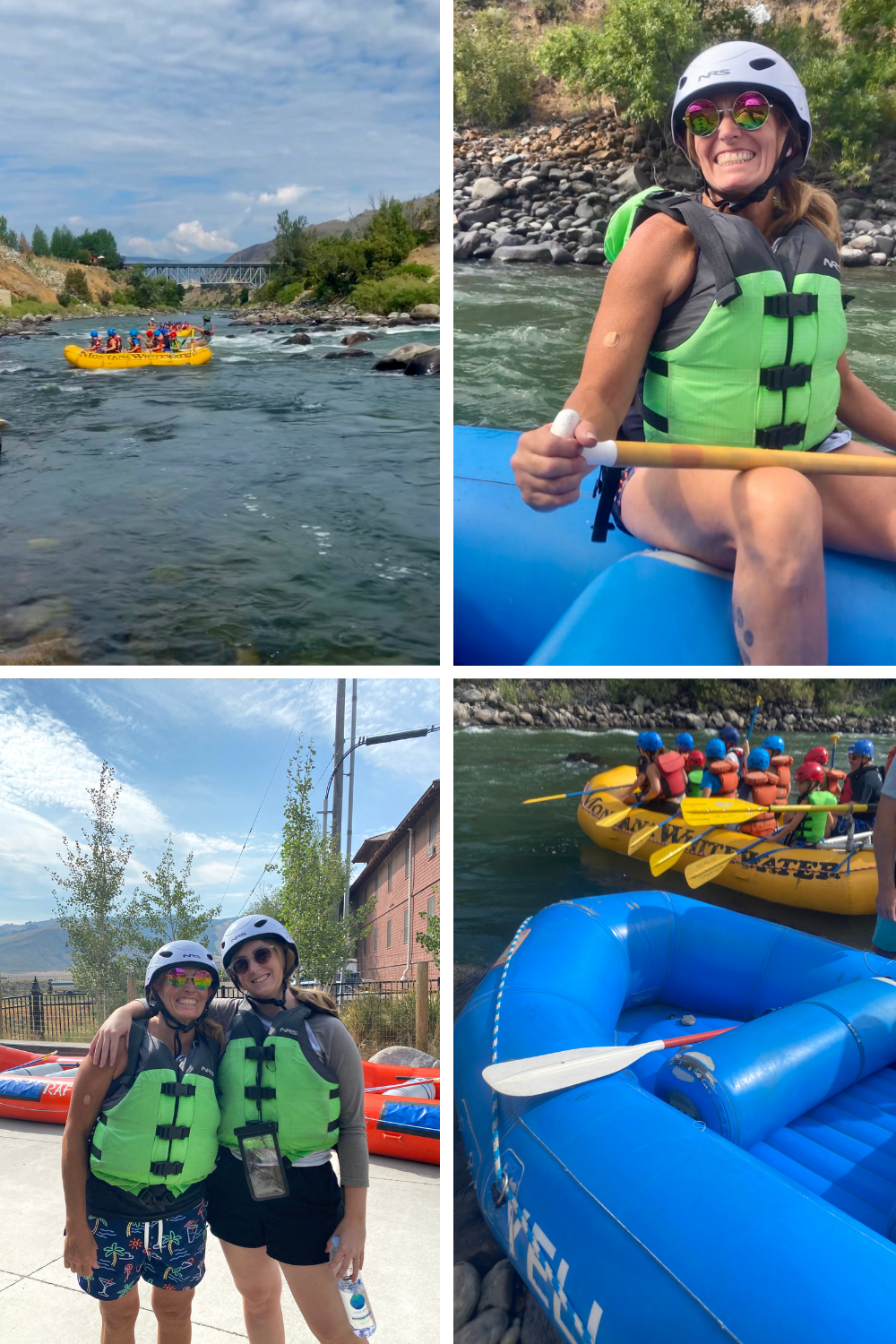
We used Yellowstone Raft Company, located right outside the North Entrance in Gardiner, MT. It’s about $60 per person for a few hours on the river and they provide all the gear — life jacket, paddle, safety briefing, everything. You just show up.
The rapids are fun but very approachable, around a 5 out of 10 in intensity. Totally fine for beginners, families, and anyone who’s never rafted before. There were calm stretches to catch your breath between the rapids, and a guide in the raft the whole time. After your bus ride back to the put-in, stop at one of the restaurants in Gardiner before heading back into the park.
Stop By Yellowstone Lake
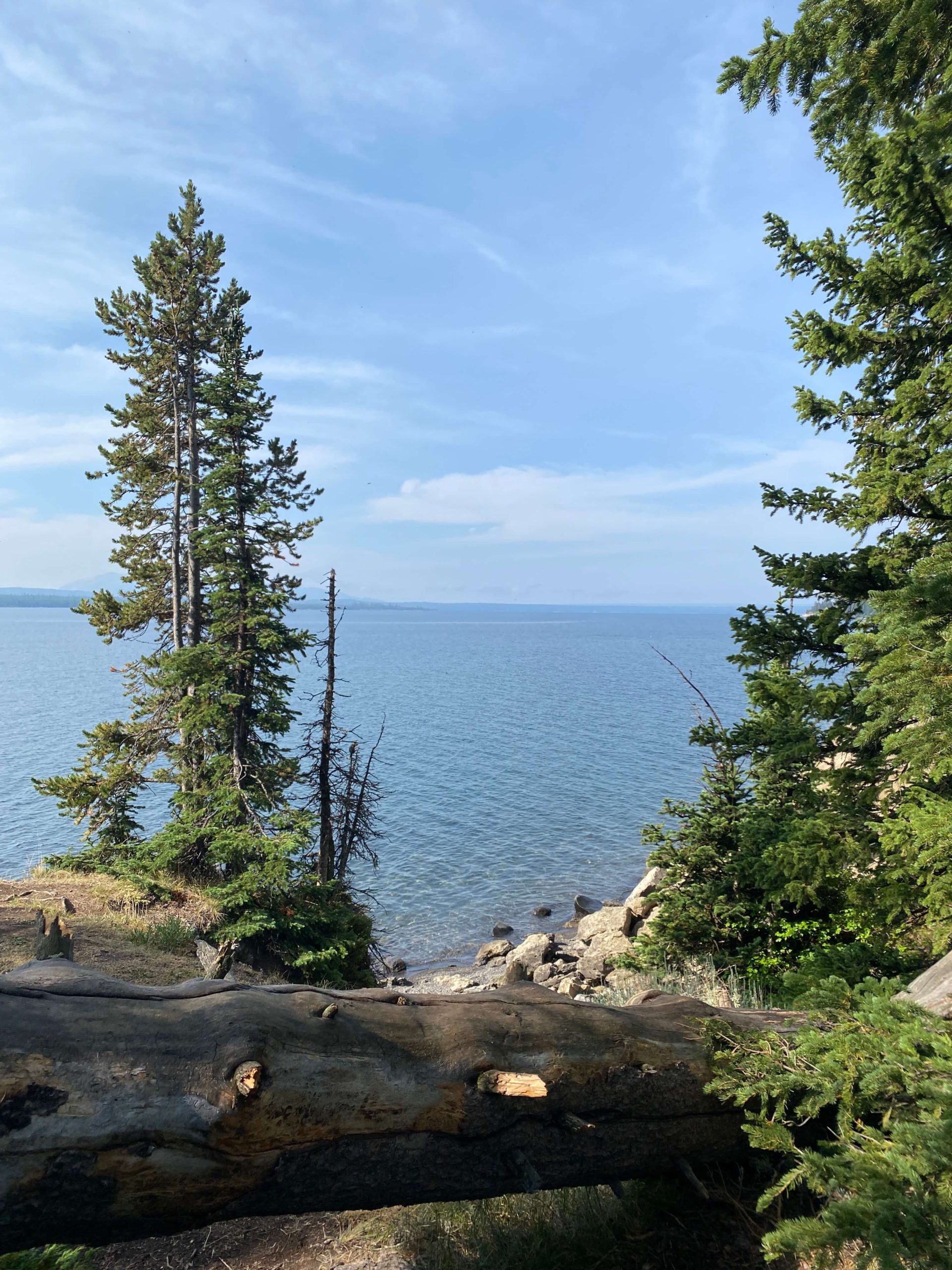
Yellowstone Lake is the largest high-altitude lake in North America, sitting above 7,000 feet, and it’s one of those places that’s easy to speed past if you’re rushing between bigger stops. Don’t. Even 20 minutes here is worth it — the scale of the lake is hard to grasp from photos, and on a clear day the Absaroka Range reflects off the water perfectly.
The lake sits in the southern part of the park and is most popular for boating, fishing, and kayaking in summer. If you have extra time, this is a great place to slow down and just sit for a while. We made a quick stop on the way and it’s one of those places I’d love to spend a full day on a future trip.
Tip: Yellowstone Lake is also a great spot for wildlife — bison, eagles, and osprey are common around the shoreline. Keep your eyes open on the drive in.
Where to Stay In and Near Yellowstone
Where you stay in Yellowstone genuinely shapes your whole trip. The park is huge — staying on the wrong side means an extra hour of driving each way to the things you want to see. Here’s a breakdown of the best options by area.
Inside the Park — Canyon Campground
If you want my honest recommendation, stay inside the park. Canyon Campground was our base on this most recent trip and it made everything easier — the Grand Canyon of Yellowstone was a 5-minute drive, we could be at Norris Geyser Basin in 20 minutes, and we weren’t losing time at the entrance gate every morning. It’s one of those decisions that sounds like roughing it but actually just makes the whole trip more efficient.
Canyon Campground has flush toilets, food storage boxes, and is steps from Canyon Village which has a general store, laundromat, and showers. Book as early as possible — this fills up months in advance in summer.
Inside the Park — Mammoth Campground
If you’re prioritizing Lamar Valley, the Roosevelt Arch, and the rafting in Gardiner, Mammoth Campground near the North Entrance is the better base. I stayed here on my first trip and loved being so close to the northern part of the park. It’s one of the few campgrounds open year-round and sits right near Mammoth Hot Springs, which is worth exploring on its own.
Under Canvas — Glamping Near Yellowstone
Under Canvas has two locations near Yellowstone — one near the West Entrance and one near the North Entrance — and they’re the best option if you want the national park experience without sleeping on the ground. Think canvas safari-style tents with real beds, wood-burning stoves, and stunning views. It’s a splurge but a good one, and a totally different vibe from the campgrounds.
Browse Under Canvas Yellowstone Here
West Yellowstone/ Gallatin Gateway, MT
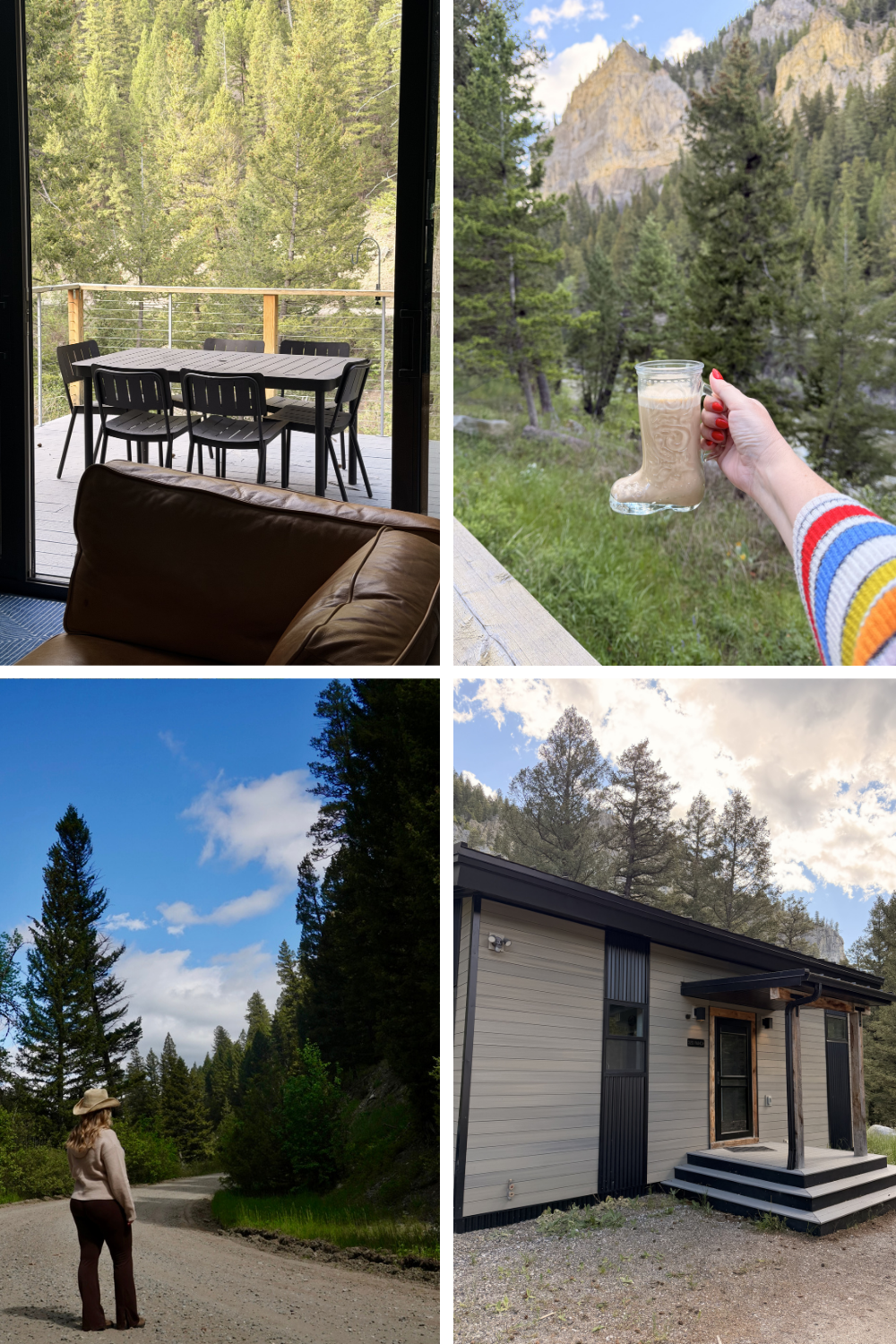
West Yellowstone is the most popular gateway town, sitting right at the West Entrance with easy access to Old Faithful, Grand Prismatic, and the geyser basin side of the park. Lots of hotel and vacation rental options at a range of price points, plus restaurants and gear shops if you need anything before heading in. I stayed in Gallatin Gateway (outside of West Yellowstone) in the most beautiful cabin pictured below.
How to Get To Yellowstone
By Air
The two most convenient airports are Bozeman Yellowstone International (BZN) and Jackson Hole Airport (JAC). Bozeman is the most popular — it’s about 90 minutes to the North Entrance or West Yellowstone and has grown significantly as a hub with direct flights from many major cities. Jackson Hole is the better choice if you’re combining Yellowstone with Grand Teton National Park, sitting about 2 hours from the South Entrance.
Both airports have car rental options on site. You absolutely need a car — there is no public transportation inside the park.If you’re road tripping, the classic combo is Yellowstone and Grand Teton back to back — the South Entrance of Yellowstone connects directly to Grand Teton National Park, making it one of the best two-park road trips in the country.
By Car
Yellowstone is drivable from several major cities if you’re building a longer road trip:
- Salt Lake City, UT — about 4.5 hours to the West Entrance
- Denver, CO — about 7 hours
- Phoenix, AZ — about 12 hours, best done as part of a multi-day road trip
If you’re road tripping, the classic combo is Yellowstone and Grand Teton back to back — the South Entrance of Yellowstone connects directly to Grand Teton National Park, making it one of the best two-park road trips in the country.
Getting Around Inside the Park
Once you’re in, a car is essential. The Grand Loop Road covers the entire park and most major attractions are accessible by paved road. Download the NPS Yellowstone app and an offline map before you arrive — cell service inside the park is minimal to nonexistent in most areas.
How Many Days Do you Need in Yellowstone?
The honest answer is that you could spend a week here and still find new things — but most people work with 2–4 days, and that’s plenty to hit the highlights.
2 days: Doable but you’ll need to be efficient. Spend one day on the geyser basin side — Grand Prismatic, Old Faithful, and Norris Geyser Basin. Use the second day for the Grand Canyon of Yellowstone and Lamar Valley in the evening. You’ll leave satisfied but wishing you had one more day.
3 days: The sweet spot. Everything from the 2-day plan plus time to slow down — a morning at the Madison River, a proper walk of the North and South Rim trails, spontaneous stops on the Grand Loop. This is what I’d recommend for a first trip.
4–5 days: Ideal if you want to hike, fish seriously, do the whitewater rafting, or add a day trip south to Grand Teton National Park. The park rewards extra time more than almost anywhere else.
Pro tip: Whatever length of trip you’re planning, don’t try to see everything in one area per day. Plan by loop — the Grand Loop divides naturally into the upper loop (Canyon, Lamar, Mammoth) and lower loop (Old Faithful, Grand Prismatic, Yellowstone Lake). Organize your days around those two sections and you’ll spend far less time backtracking.
Best Time to Visit Yellowstone
Yellowstone is a year-round park but each season offers a completely different experience. Here’s what to expect depending on when you go.
June–August is peak season. All roads are open, weather is warm, and wildlife is active and visible. Expect crowds at the major attractions — Old Faithful, Grand Prismatic, and Artist Point in particular. Use the evening strategy at the canyon, arrive early at Old Faithful, and you’ll be fine. This is when most people visit and for good reason.
September is arguably the best month to go. Crowds drop significantly after Labor Day, temperatures are still pleasant, and it’s elk rut season — you can hear bulls bugling across the valleys in the early morning. The fall colors start coming in by late September and the light is incredible. If you have flexibility, go in September.
October–November is shoulder season. Most campgrounds close, some roads begin closing for winter, but the park is beautiful and nearly empty. A great option if you don’t mind cooler temps and want the place mostly to yourself.
December–February is winter Yellowstone, which is a completely different trip. Most roads close to regular vehicles but open to snowmobiles and snowcoaches. The geysers steam dramatically against the cold air, bison trudge through deep snow, and the whole park feels like another world. Guided snowcoach tours are the best way to experience it.
March–May is the other shoulder season. Roads reopen gradually starting in April, and late May is one of the best times for wildlife — baby bison, bear cubs, and newborn elk are everywhere.
FAQs
Do I need reservations for Yellowstone? For camping inside the park, yes — absolutely, and as early as possible. Campgrounds like Canyon and Mammoth fill up months in advance during summer. For day entry, timed entry reservations are not currently required, but arrive early during peak season to avoid long waits at the entrance gates.
Can you do Yellowstone in one day? Technically yes, but you’ll feel rushed and leave wishing you had more time. One day is enough to see Grand Prismatic, Old Faithful, and the Grand Canyon of Yellowstone — but the park rewards extra time more than almost anywhere else. Three days is the sweet spot.
Is Yellowstone close to Grand Teton? Yes — Grand Teton National Park is directly south of Yellowstone, about 2 hours from Canyon Village to the main Teton area. The two parks share a border and most people combine them into one trip. It’s one of the best two-park road trips in the country.
Do you need bear spray in Yellowstone? If you’re sticking to boardwalks and developed areas you’ll be fine without it. If you’re doing any hiking on backcountry or less-trafficked trails, yes — carry bear spray and know how to use it. Both black bears and grizzly bears live in the park.
What is the best entrance to use for Yellowstone? It depends on where you’re staying and what you want to see first. The West Entrance near West Yellowstone puts you closest to Old Faithful and Grand Prismatic. The North Entrance at Gardiner is best for Lamar Valley, Mammoth, and the Roosevelt Arch. The South Entrance works well if you’re coming from Grand Teton.