3 Day Yellowstone Itinerary for First-Time Visitors (Map + Where to Stay)
Yellowstone National Park is one of the most incredible places I’ve ever visited, but it’s also much bigger than most people expect. With over 2 million acres, dozens of geothermal areas, scenic drives, waterfalls, lakes, and wildlife viewing opportunities, trying to see everything can quickly become overwhelming.
If you’re visiting Yellowstone for the first time, I recommend spending at least three days exploring the park (if you can’t though, no worries).
This 3 day Yellowstone itinerary is designed specifically for first-time visitors and focuses on the park’s three biggest draws: geothermal features, stunning canyon views, and incredible wildlife. Over three days, you’ll visit famous sights like Old Faithful, Grand Prismatic Spring, the Grand Canyon of the Yellowstone, Lamar Valley, and Mammoth Hot Springs while following a route that minimizes backtracking and maximizes your time in the park.
Yellowstone Itinerary at a Glance
If you’re short on time and can’t read my whole article (right now), here is a general overview of what it may look like to spend 3 days in Yellowstone National Park.
Day 1: Geysers & Thermal Features
- Madison Valley
- Grand Prismatic Spring/ Midway Geyser Basin
- Old Faithful
Day 2: Waterfalls, Canyon Views & Yellowstone Lake
- Grand Canyon of the Yellowstone
- Artist Point
- Upper & Lower Falls
- Yellowstone Lake
- West Thumb Geyser Basin
Day 3: Wildlife & Mammoth Hot Springs
- Lamar Valley
- Tower Fall
- Mammoth Hot Springs
- Roosevelt Arch
- Gardiner, Montana
Day 1 Yellowstone Itinerary: Geysers & Thermal Features
Day one of this Yellowstone itinerary focuses on the park’s famous geothermal features. If this is your first visit, today is all about seeing the iconic sights you’ve probably seen in photos: colorful hot springs, erupting geysers, steaming landscapes, and some of Yellowstone’s most unique scenery.
During my recent (June 2026) Yellowstone trip, we camped just outside of West Yellowstone in an Outdoorsy camper van, which made for an easy and convenient base. I recommend entering the park early in the morning to beat the crowds and maximize your time exploring.
Stop 1: Madison Valley
Start your day by driving through Madison Valley, one of the first areas you’ll encounter when entering from the West Entrance. This scenic stretch of road follows the Madison River and is known for its wildlife viewing opportunities.
Keep an eye out for bison grazing in the meadows and pull over at designated viewpoints to enjoy the mountain views. While many visitors rush straight to Old Faithful, Madison Valley offers a quieter introduction to Yellowstone’s landscape and is especially beautiful in the early morning light.
Time needed: 30-45 minutes
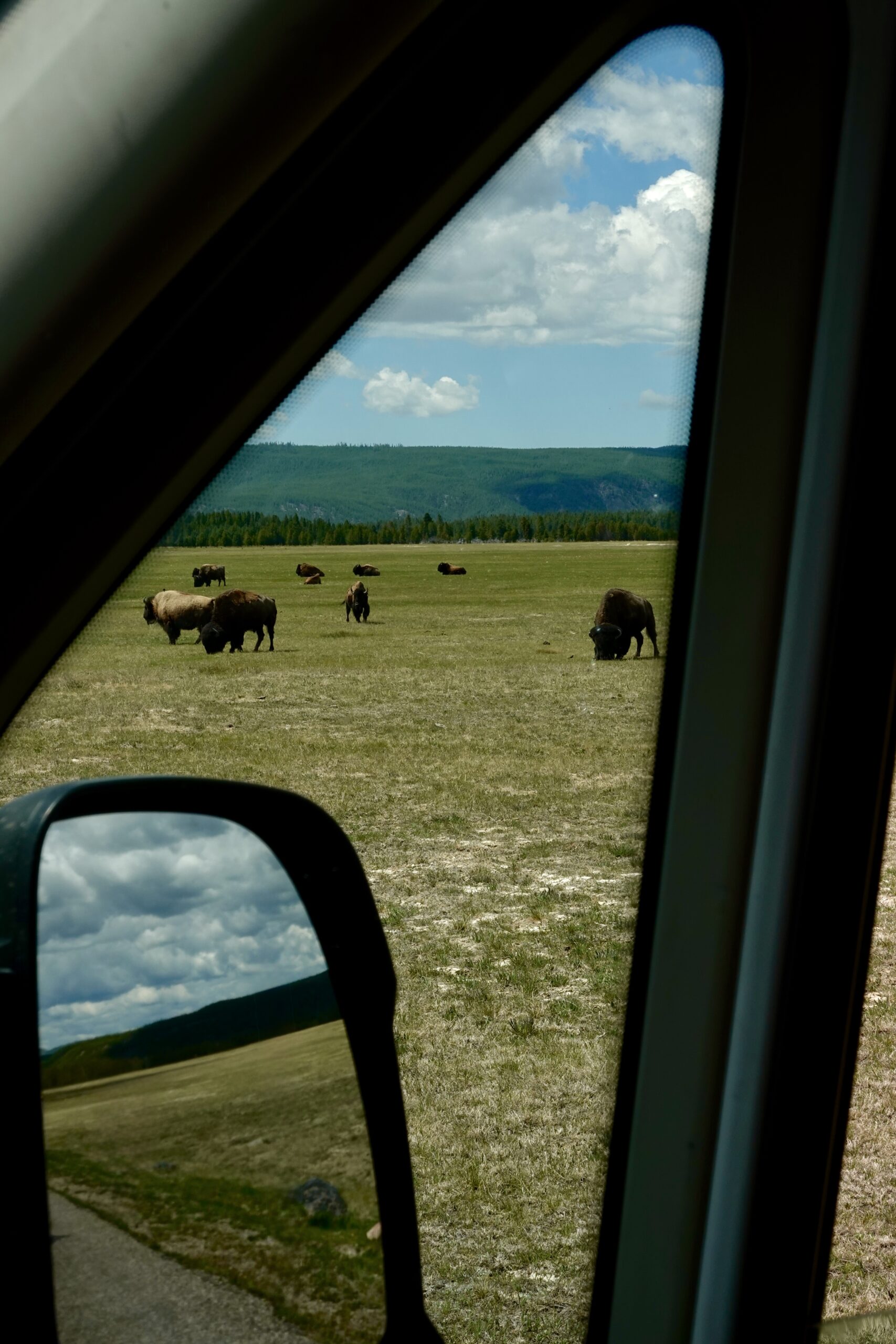
bison grazing right outside of our van window in madison valley
Stop 2: Grand Prismatic Spring
Next, head south toward Grand Prismatic Spring, Yellowstone’s largest hot spring and one of the most photographed locations in the park.
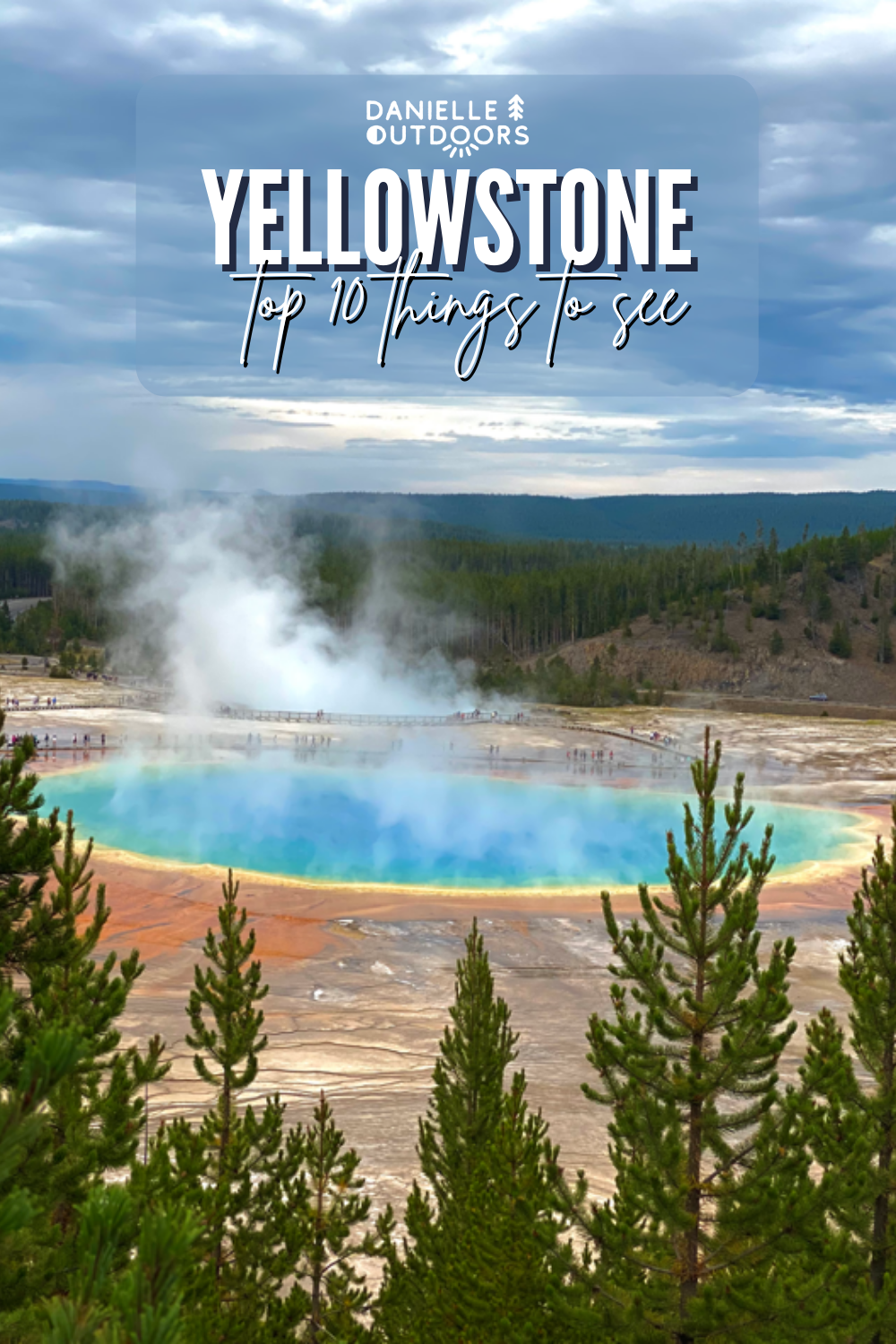
The vibrant blue center surrounded by rings of orange, yellow, and green is even more impressive in person. While the boardwalk provides a close-up view, I highly recommend taking the short hike to the Grand Prismatic Overlook. The elevated perspective offers the best view of the spring’s famous colors and is one of my favorite viewpoints in Yellowstone. I honestly couldn’t choose between the two viewpoints though, you need to see both.
Since you’re already at Grand Prismatic, take time to explore the rest of Midway Geyser Basin. The boardwalk loop passes several geothermal features, including Excelsior Geyser Crater, a massive hot spring that pumps thousands of gallons of water into the Firehole River every minute.
Time needed: 1-2 hours
Tip: Visit early or in the afternoon if possible, as parking lots can fill quickly during the summer months.
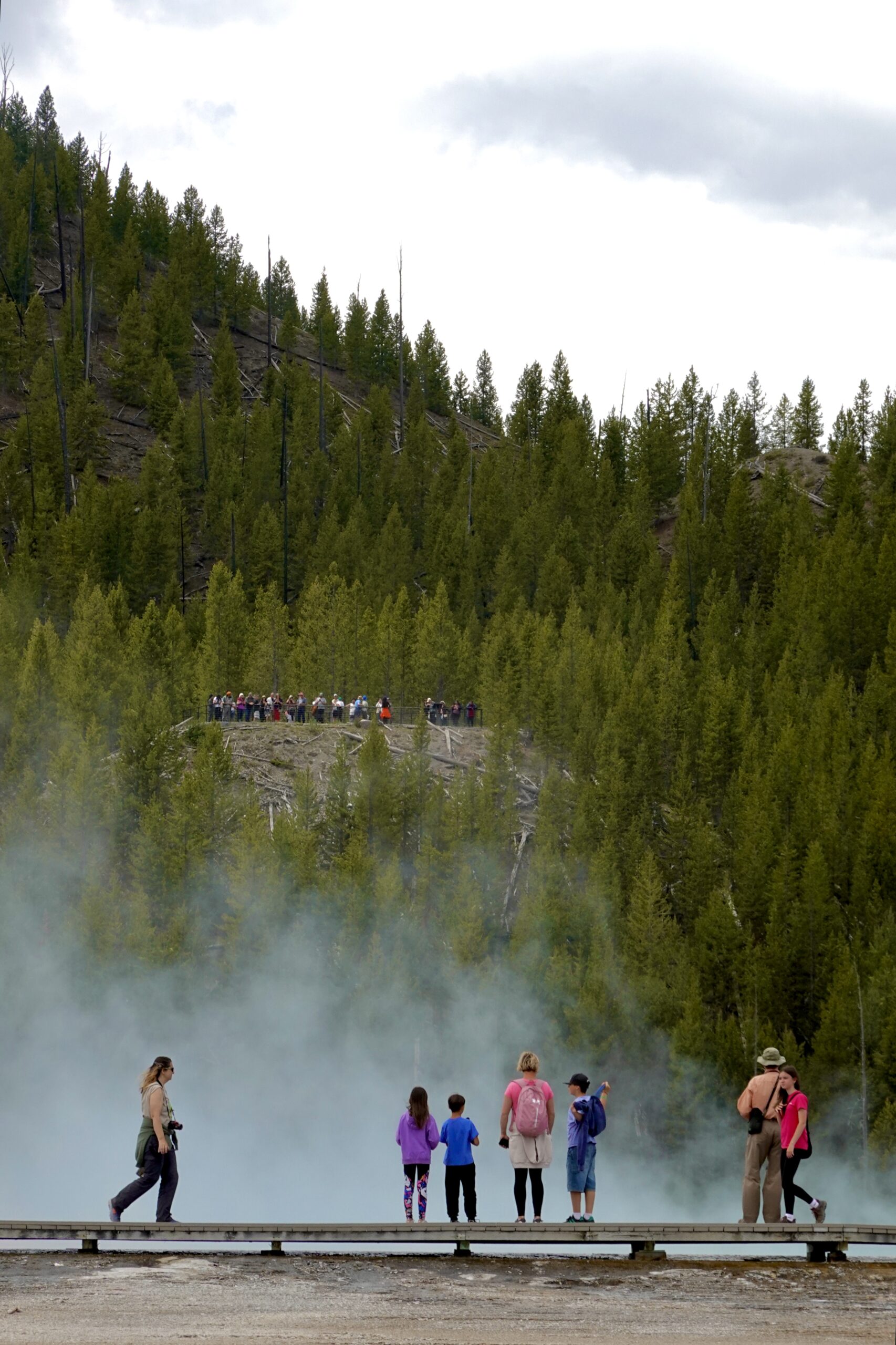
view of people on the boardwalk AND overlook of grand prismatic spring
Stop 3: Old Faithful
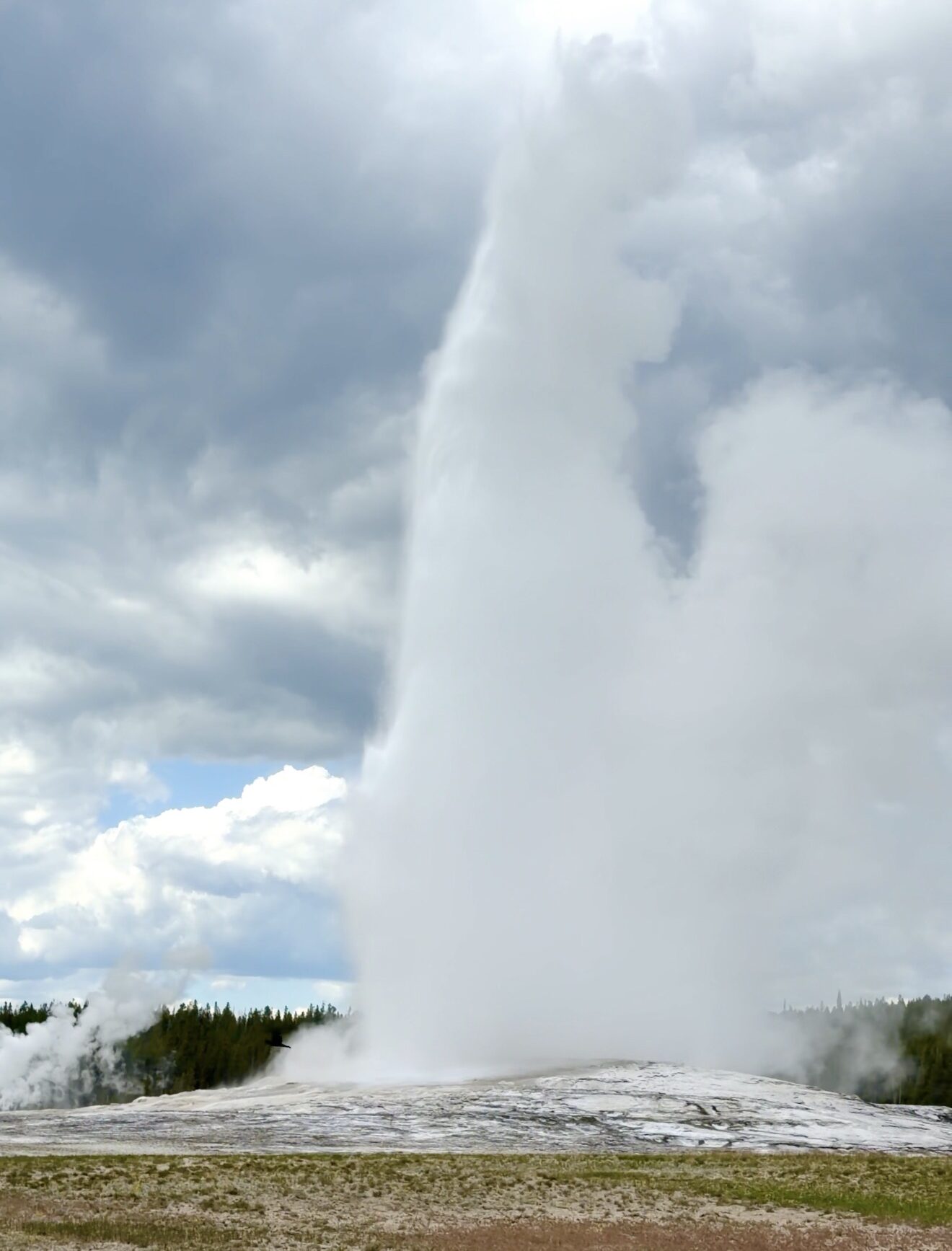
No first-time Yellowstone itinerary would be complete without a stop at Old Faithful.
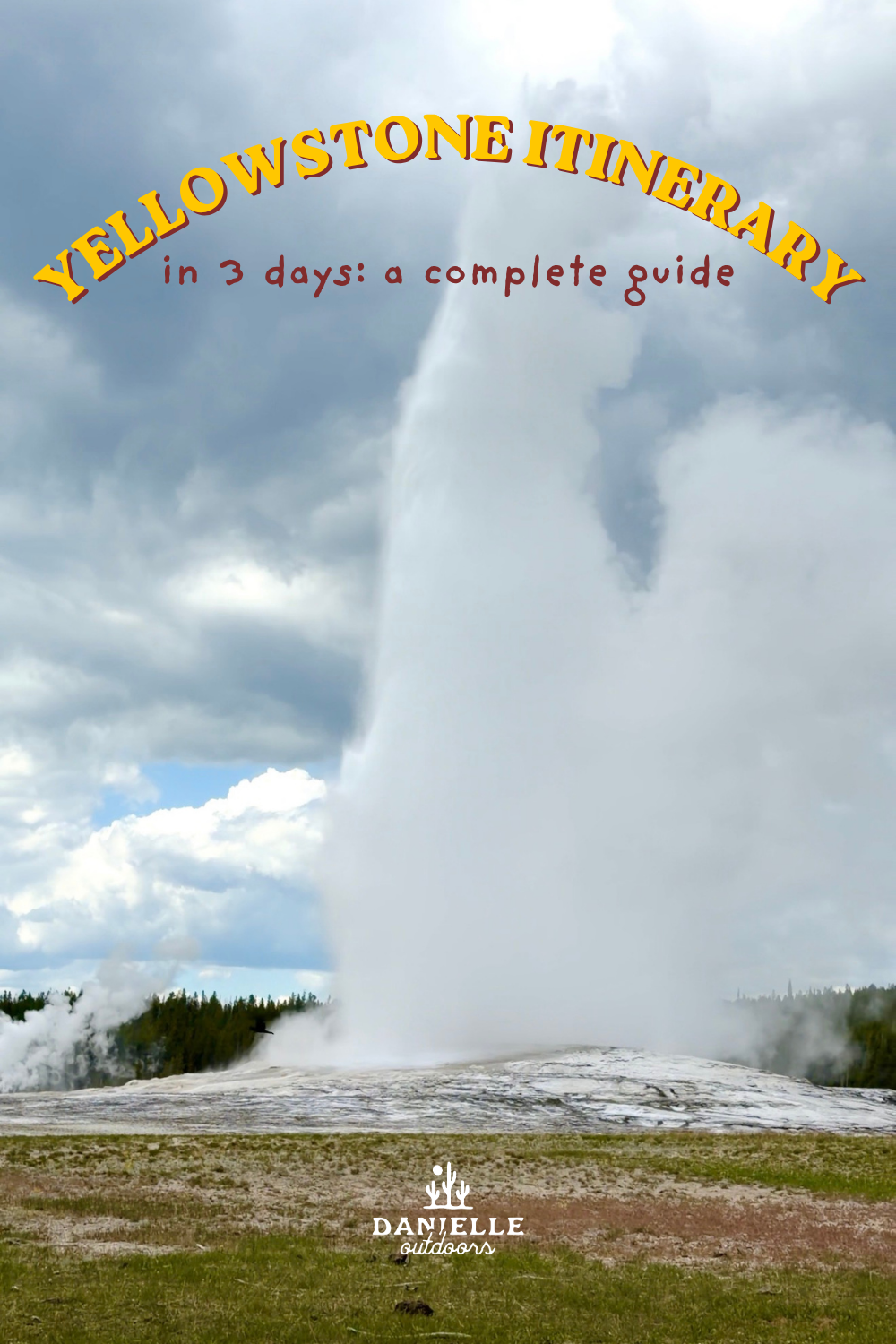
While Yellowstone is home to hundreds of geysers, Old Faithful remains the most famous due to its predictable eruption schedule. Check the posted eruption times when you arrive and plan to explore the surrounding area while you wait.
Watching Old Faithful erupt is one of those classic Yellowstone experiences that lives up to the hype, especially for first-time visitors. When I was there, the predicted eruption time was 4pm and we set up chairs around 3:15pm, which allowed us a front-row seat.
Time needed: 1-2 hours
End of Your Day
After a full day of exploring Yellowstone’s geothermal wonders, head back toward your lodging or campsite. If you’re staying near West Yellowstone, consider grabbing dinner in town before resting up for day two, which includes some of Yellowstone’s most spectacular waterfalls, canyon views, and wildlife viewing opportunities.
If you still have energy at the end of the day, consider adding one of these nearby stops:
- Firehole Lake Drive
- Fountain Paint Pot Trail
- Fairy Falls Trail
- Biscuit Basin (if open)
Day 1 Highlights: Grand Prismatic Spring, Old Faithful, Upper Geyser Basin
Driving Time: ~2-3 hours total
Best Entrance: West Entrance
Overnight: West Yellowstone
Day 2 Yellowstone Itinerary: Waterfalls, Lakes, & Canyons
After spending your first day exploring Yellowstone’s famous geothermal features, day two focuses on some of the park’s most dramatic scenery. You’ll visit the Grand Canyon of the Yellowstone, several incredible waterfalls, Yellowstone Lake, and one of the best wildlife viewing areas in the park.
I recommend getting an early start today, as the canyon viewpoints are popular and wildlife is often most active during the morning hours. On one of my trips, I camped in Canyon Village, which made seeing the area for sunset and early in the morning super easy!
Stop 1: Grand Canyon of Yellowstone
Start your morning at the Grand Canyon of the Yellowstone, one of the most breathtaking areas in the entire park. Carved by the Yellowstone River, this colorful canyon stretches nearly 20 miles long and reaches depths of up to 1,200 feet.
The canyon’s vibrant yellow, orange, and red walls are what inspired the park’s name, and the views here are easily some of the most iconic in Yellowstone.
Plan to spend a few hours exploring the overlooks and taking in the scenery from multiple viewpoints. Here are a few of the best ones:
North Rim Viewpoints
The North Rim of the Grand Canyon of the Yellowstone is a great place to start checking out the area.
Some of my favorite viewpoints include:
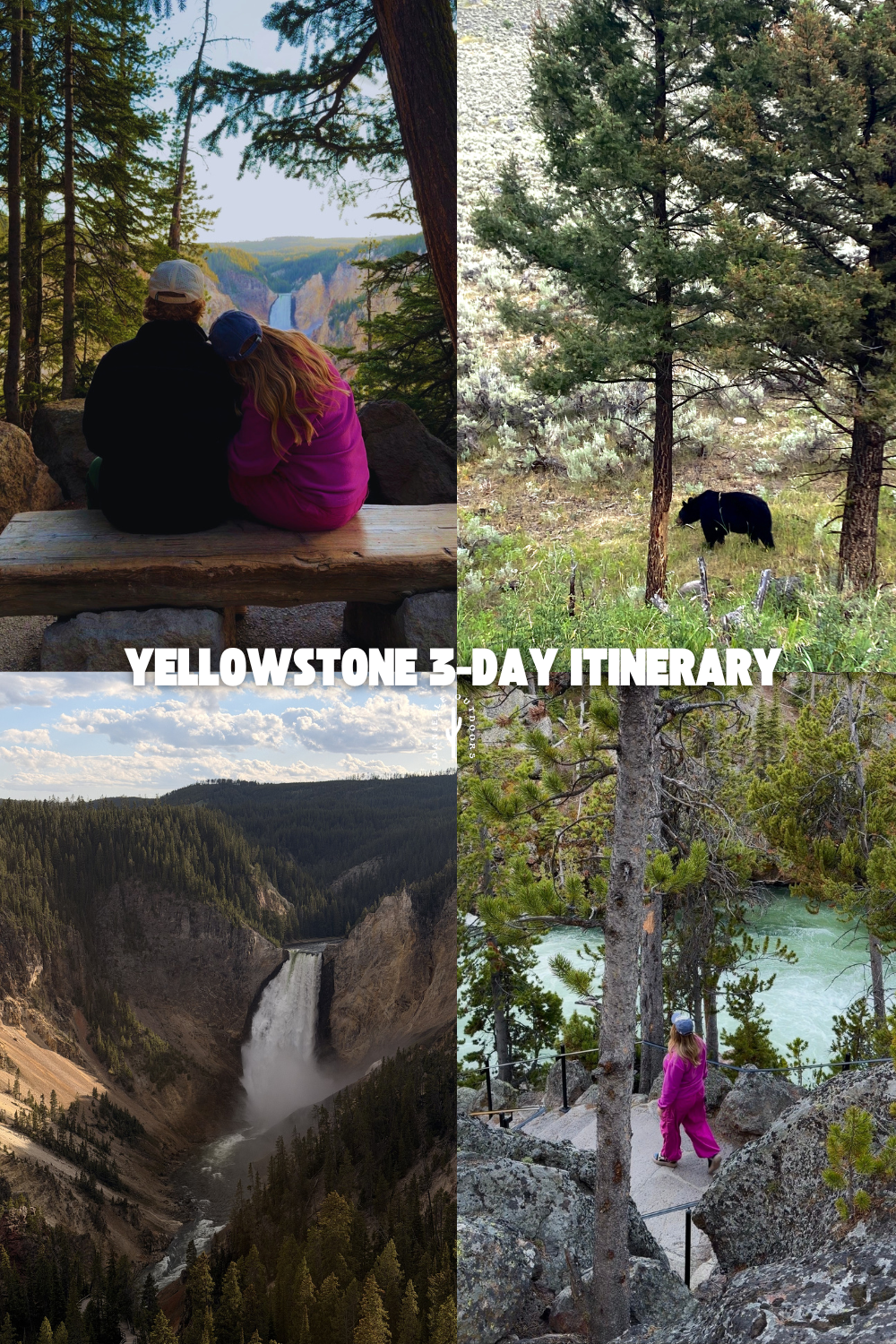
Lookout Point – One of the best views of the Lower Falls and a great place to appreciate just how massive the canyon really is (video below).
Grand View – Offers sweeping views looking down the canyon and showcases the colorful rock formations that make this area so famous.
Inspiration Point – Located at the end of North Rim Drive, this overlook provides panoramic views of the canyon stretching into the distance and is one of the most scenic viewpoints in the park.
If you only have time for one North Rim stop, I’d choose either Lookout Point or Inspiration Point. However, since the viewpoints are located close together, it’s easy to visit all three in less than an hour.
Upper & Lower Falls
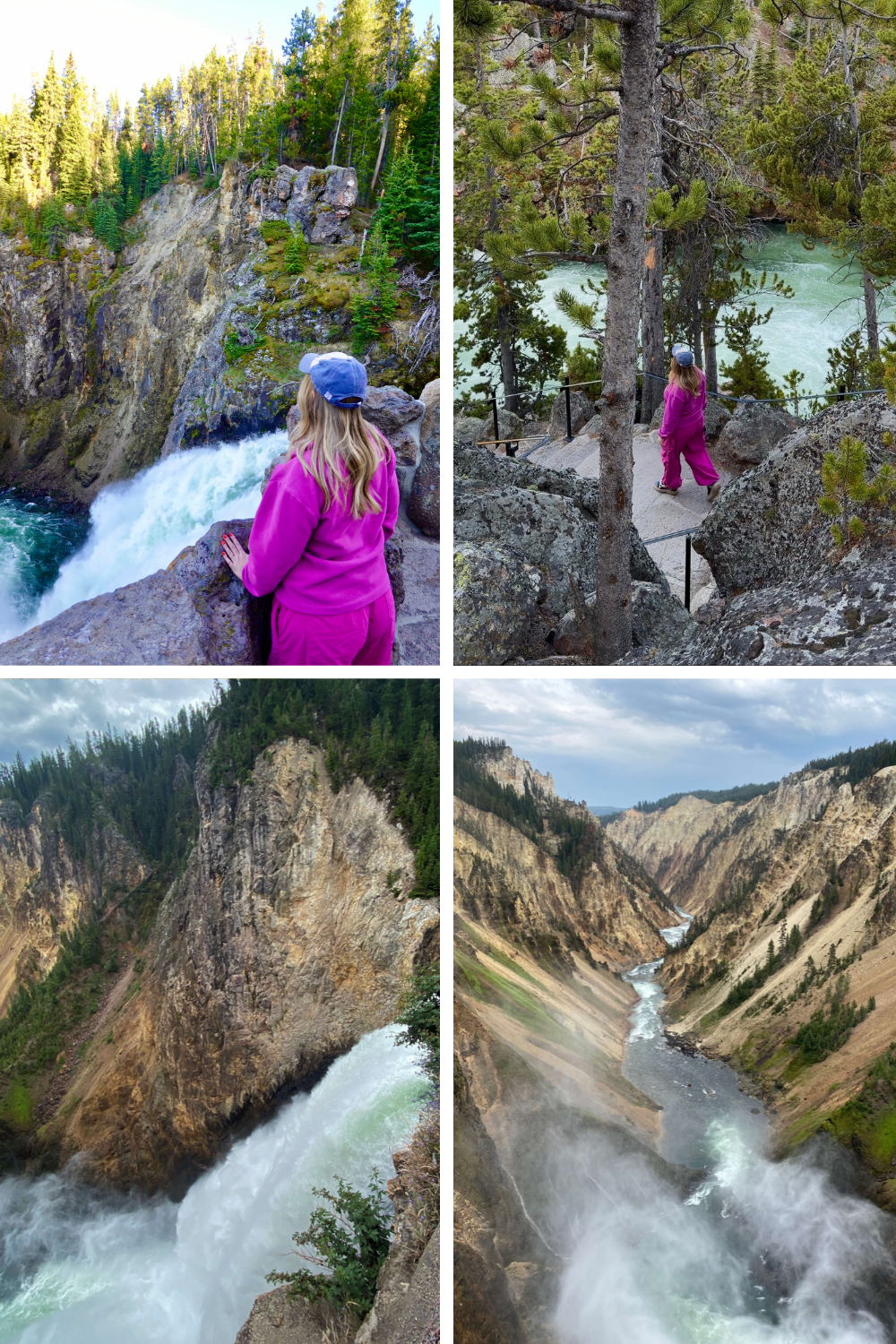
Next, visit Yellowstone’s two most famous waterfalls., which are also on the North Rim of the Grand Canyon of Yellowstone.
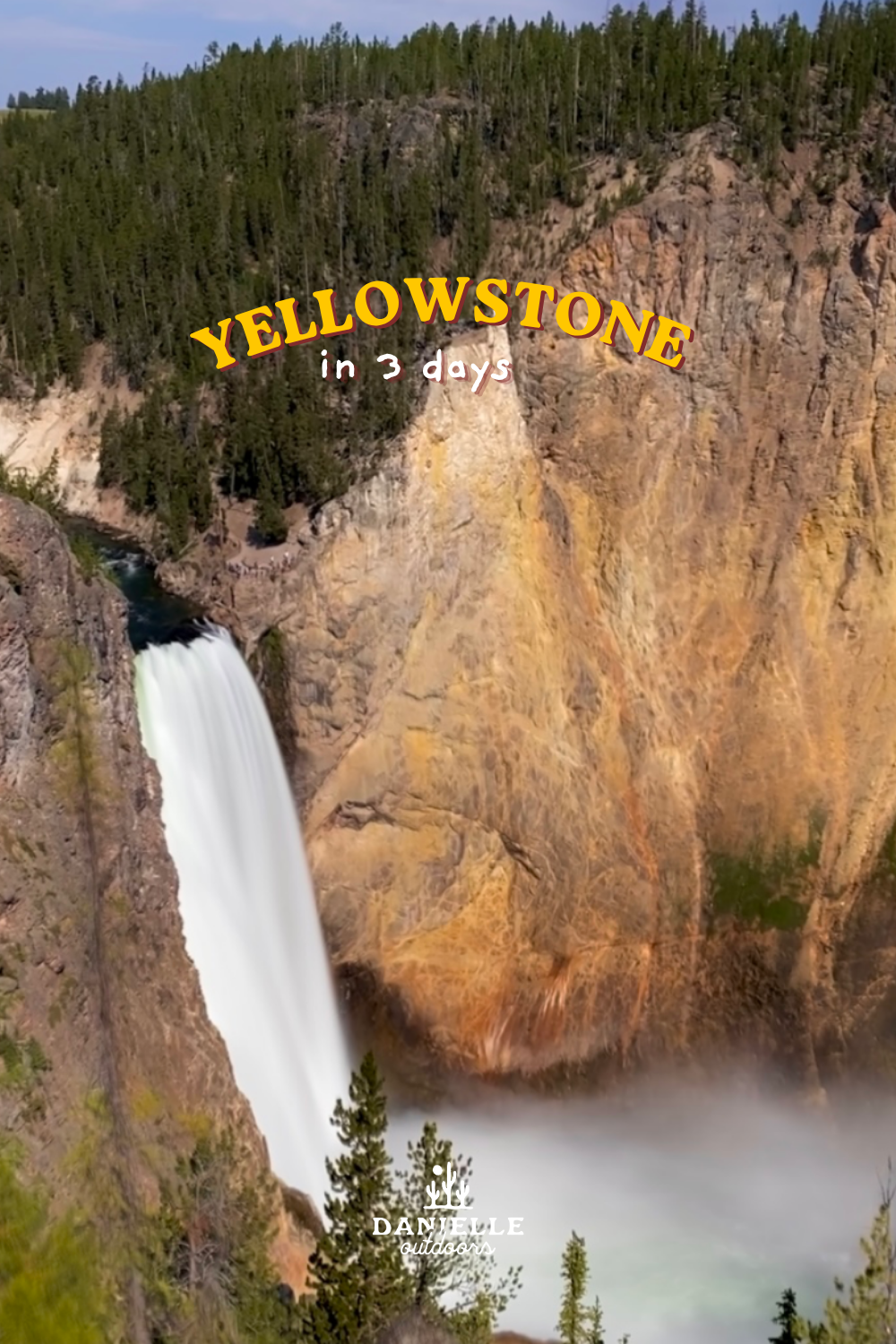
The Lower Falls plunges 308 feet into the canyon below, making it nearly twice the height of Niagara Falls. Several viewpoints throughout the canyon provide different perspectives of the waterfall.
The Upper Falls is located just upstream and is worth a quick stop as well.
If you’re up for a bit more adventure, consider hiking part of the Brink of the Lower Falls Trail for a closer look at the powerful waterfall.
Time needed: 1-2 hours
Artist Point, and South Rim Viewpoints
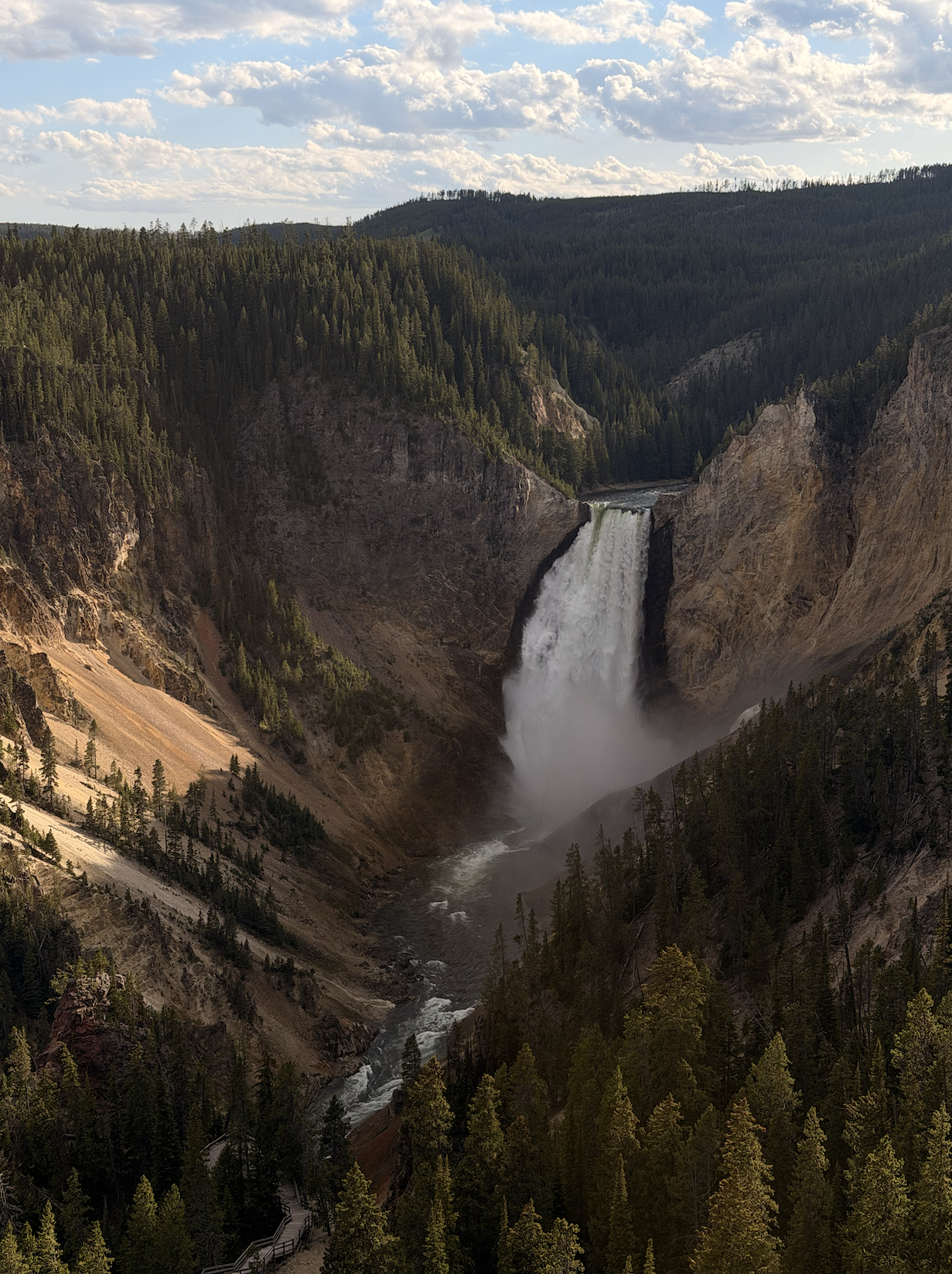
One of the most famous viewpoints in Yellowstone, Artist Point offers a stunning view of the Lower Falls framed by the canyon walls. I LOVE this spot so much.
If you’ve ever seen a postcard or calendar photo of Yellowstone, there’s a good chance it was taken from here.
The short walk from the parking lot makes this one of the easiest and most rewarding viewpoints in the park.
Time needed: 20-30 minutes
Stop 2: Hayden Valley
After leaving the canyon area, continue south through Hayden Valley.
This wide-open valley is one of the best places in Yellowstone to spot wildlife, including bison, elk, bears, coyotes, and wolves.
We saw several large bison herds here during our visit, and it’s one of those areas where you’ll want to allow extra time because you never know what wildlife you might encounter.
Pull over at designated turnouts and spend some time scanning the valley with binoculars if you have them.
Time needed: 30-60 minutes

Stop 3: Yellowstone Lake
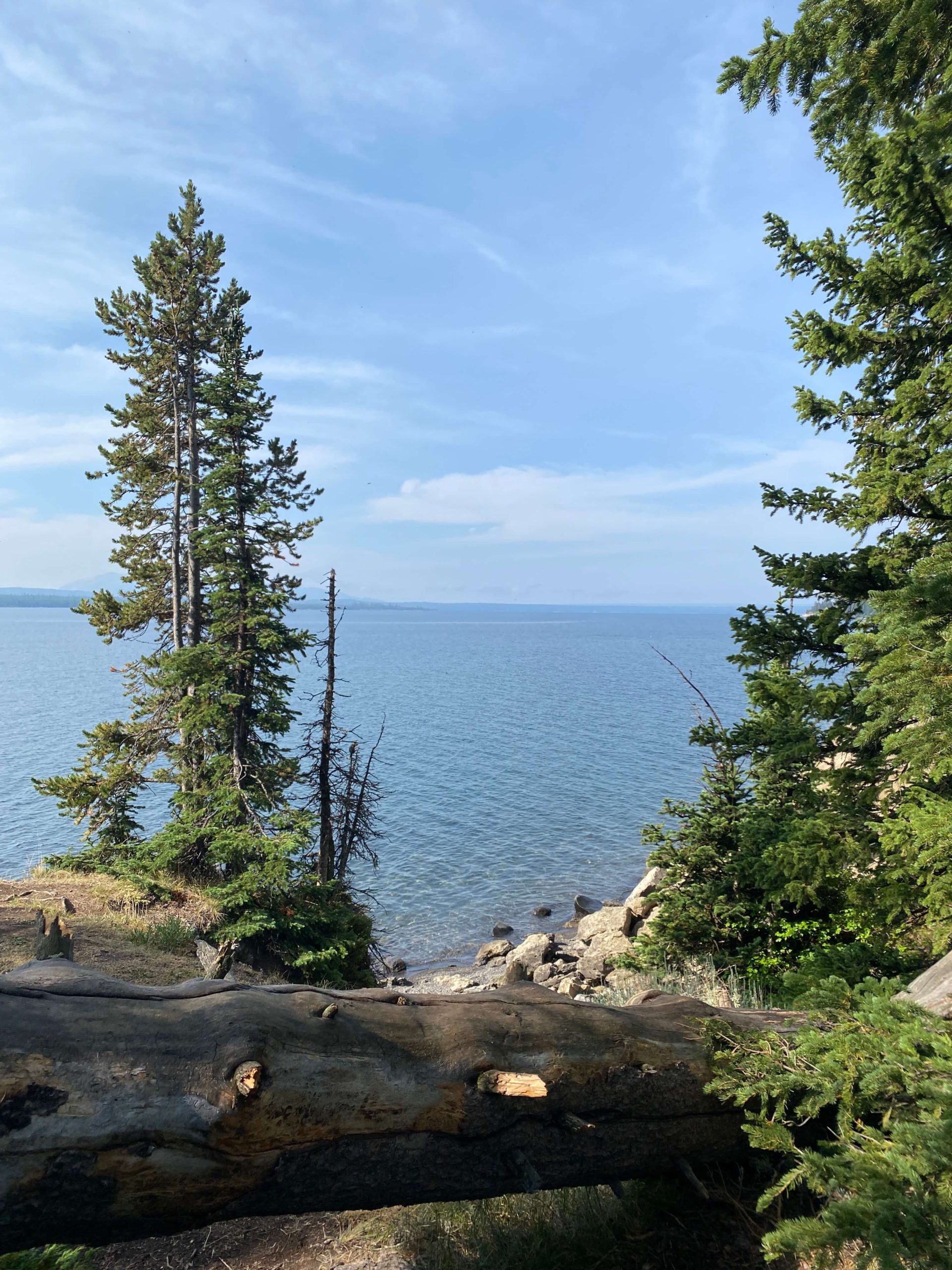
Continue south to Yellowstone Lake, the largest high-elevation lake in North America.
The scenery here feels completely different from the rest of the park. Surrounded by forests and mountains, the lake provides a peaceful break from the busier geothermal areas.
Take a walk along the shoreline, enjoy the views, and spend some time appreciating this quieter side of Yellowstone. You can fish here, too! I read while my husband fishes, haha.
Time needed: 30-60 minutes
Stop 4: West Thumb Geyser Basin
I hate to admit I haven’t been here, but I still wanted to add it to the list for you! Before ending the day, stop at West Thumb Geyser Basin, one of Yellowstone’s most unique geothermal areas.
Here, colorful hot springs and bubbling pools sit right along the edge of Yellowstone Lake, creating a landscape unlike anywhere else in the park.
The boardwalk loop is relatively short and offers beautiful views of both the geothermal features and the lake.
Time needed: 30-45 minutes
End of the Day
As the sun begins to set, make your way back toward your lodging. If you’re staying near West Yellowstone, you’ll likely retrace part of your route through Hayden Valley, which can provide another opportunity for wildlife viewing.
Day two combines many of Yellowstone’s most iconic sights and some of its most beautiful scenery, making it one of the highlights of this entire itinerary. Tomorrow, you’ll explore Lamar Valley, Mammoth Hot Springs, and some of the park’s best wildlife viewing areas.
Day 2 Highlights: Grand Canyon of the Yellowstone, Artist Point, Hayden Valley, Yellowstone Lake, West Thumb
Driving Time: ~3-4 hours total (plus stops)
Best Wildlife Viewing: Hayden Valley
Overnight: West Yellowstone, Canyon Village, or Gardiner
Day 3 Yellowstone Itinerary: Wildlife, Lamar Valley, & Mammoth Hot Springs
For your final day in Yellowstone, you’ll head toward the park’s northern section, home to some of the best wildlife viewing in North America. Today combines wide-open valleys, scenic overlooks, and Yellowstone’s famous Mammoth Hot Springs.
I recommend starting as early as possible, especially if you want the best chance of spotting wildlife in Lamar Valley. Sunrise and the first few hours of daylight are often the most active times of day for animals.
Stop 1: Lamar Valley
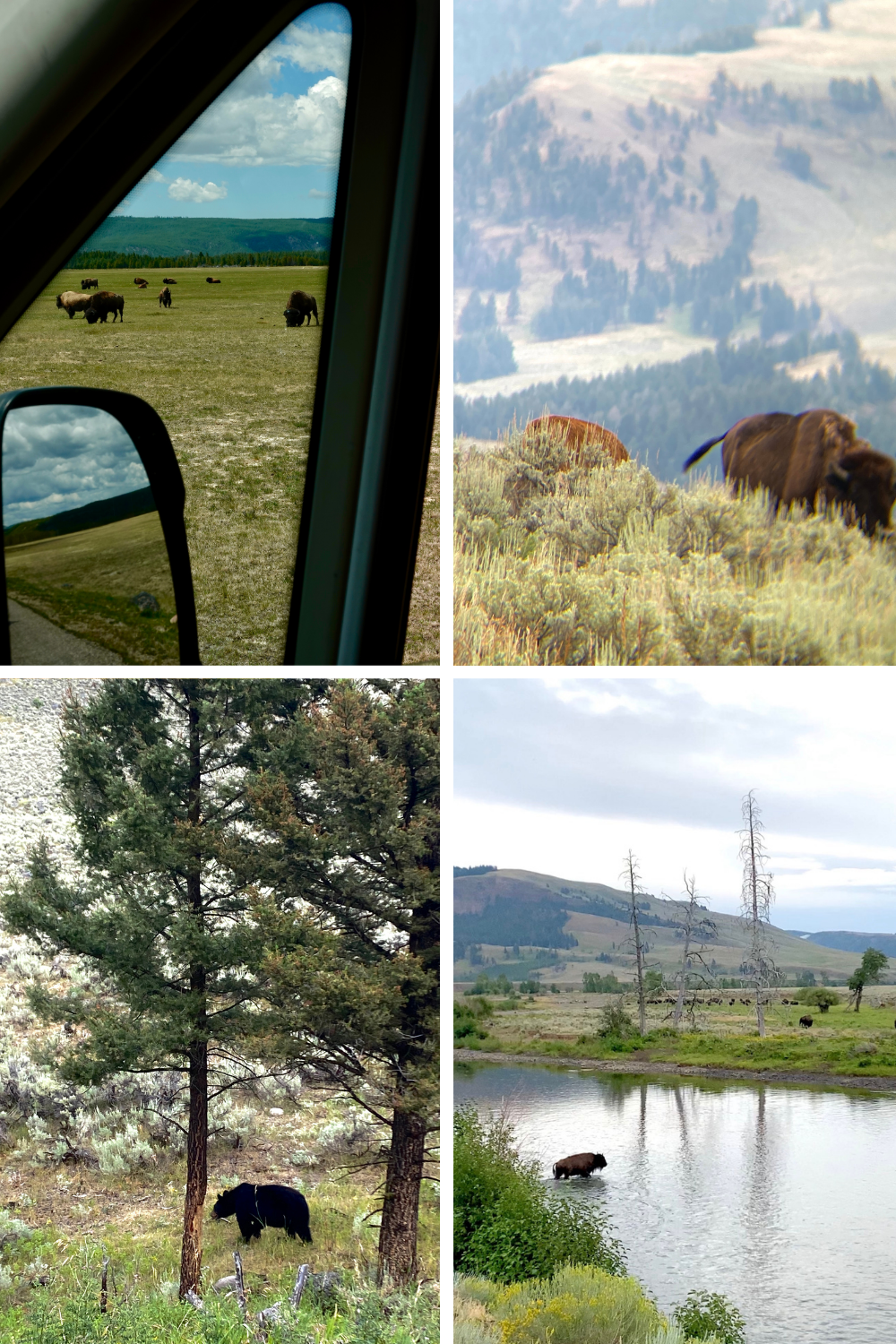
Lamar Valley is one of the best places in Yellowstone to see wildlife.
The valley is home to large herds of bison, pronghorn, elk, coyotes, bears, and Yellowstone’s famous wolf packs. Even if you’re not a dedicated wildlife photographer, simply watching bison roam across the valley is an unforgettable experience.
During our visit, this was one of the most memorable areas of the park and felt completely different from the geothermal features and canyon views we experienced earlier in the trip.
Bring binoculars if you have them and plan to spend some time stopping at pullouts along the road.
Time needed: 1-2 hours
Stop 2: Tower Fall
As you make your way west from Lamar Valley, stop at Tower Fall.
This 132-foot waterfall cascades through a dramatic rock formation of volcanic pinnacles that gave the falls their name. While it’s not as large as the waterfalls in the Grand Canyon of the Yellowstone, it’s one of the park’s most picturesque waterfalls and makes an easy stop along the route. I sadly haven’t been!
Time needed: 20-30 minutes
Stop 3: Mammoth Hot Springs
Next, head to Mammoth Hot Springs, one of Yellowstone’s most unique geothermal areas.
Unlike the colorful pools and geysers found elsewhere in the park, Mammoth is known for its striking white travertine terraces created by mineral-rich hot water flowing over limestone.
The boardwalk system winds through both the Upper and Lower Terraces, offering plenty of opportunities to explore the area on foot.
This section of the park almost feels like a different world and is one of Yellowstone’s most distinctive landscapes. I have camped in this area at Mammoth Campground on my first trip!
Time needed: 1-2 hours
Optional Stop: Norris Geyser Basin
If you’re heading back toward West Yellowstone and still have time, consider adding Norris Geyser Basin.
Home to Steamboat Geyser, the world’s tallest active geyser, Norris is one of Yellowstone’s most active geothermal areas and can be a worthwhile addition to your itinerary.
Time needed: 1-2 hours
Optional Stop: Norris Geyser Basin
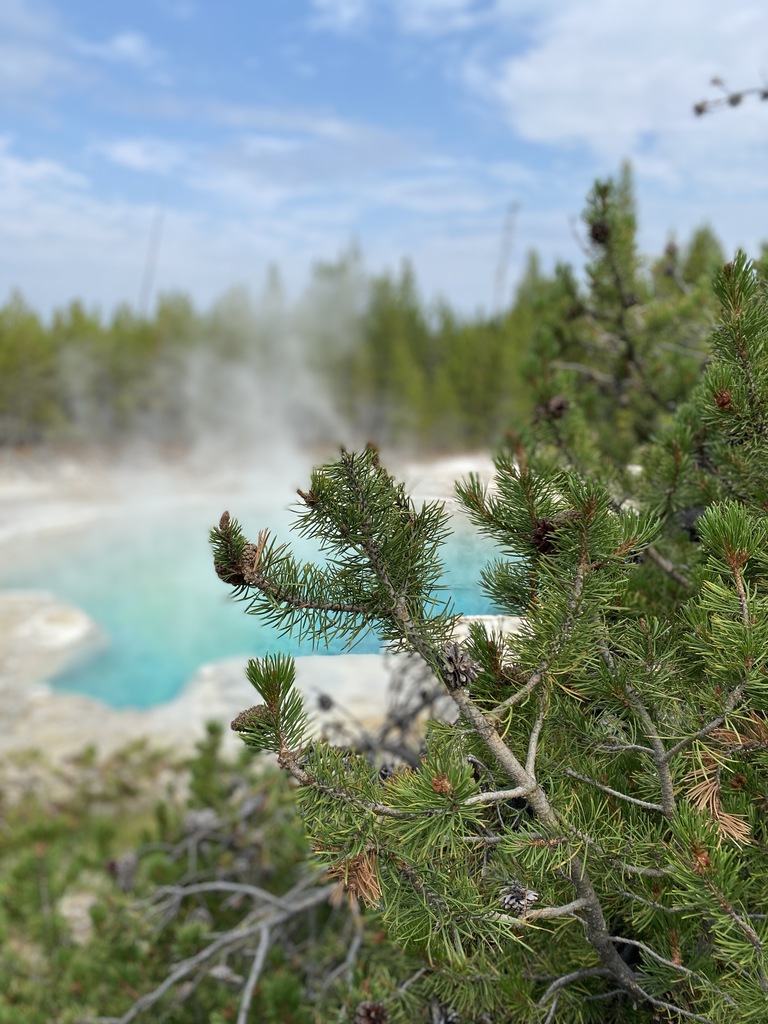
If you’re heading back toward West Yellowstone and still have time, consider adding Norris Geyser Basin.
Home to Steamboat Geyser, the world’s tallest active geyser, Norris is one of Yellowstone’s most active geothermal areas and can be a worthwhile addition to your itinerary.
Time needed: 1-2 hours
End Your Yellowstone Adventure
By the end of day three, you’ll have experienced Yellowstone’s most famous geothermal features, stunning canyon views, waterfalls, lakes, and wildlife viewing areas. While you could easily spend a week exploring the park, this itinerary covers Yellowstone’s biggest highlights and is a great introduction for first-time visitors.
If you’re planning a future trip, I’d highly recommend returning to explore more of Yellowstone’s hiking trails, backcountry areas, and lesser-known geothermal features. But for most first-time visitors, this 3 day Yellowstone itinerary offers the perfect balance of scenery, wildlife, and iconic Yellowstone experiences.
Best Time to Visit Yellowstone
Yellowstone is a year-round park but each season offers a completely different experience. Here’s what to expect depending on when you go.
June–August is peak season. All roads are open, weather is warm, and wildlife is active and visible. Expect crowds at the major attractions — Old Faithful, Grand Prismatic, and Artist Point in particular. Use the evening strategy at the canyon, arrive early at Old Faithful, and you’ll be fine. This is when most people visit and for good reason.
September is arguably the best month to go. Crowds drop significantly after Labor Day, temperatures are still pleasant, and it’s elk rut season — you can hear bulls bugling across the valleys in the early morning. The fall colors start coming in by late September and the light is incredible. If you have flexibility, go in September.
October–November is shoulder season. Most campgrounds close, some roads begin closing for winter, but the park is beautiful and nearly empty. A great option if you don’t mind cooler temps and want the place mostly to yourself.
December–February is winter Yellowstone, which is a completely different trip. Most roads close to regular vehicles but open to snowmobiles and snowcoaches. The geysers steam dramatically against the cold air, bison trudge through deep snow, and the whole park feels like another world. Guided snowcoach tours are the best way to experience it.
March–May is the other shoulder season. Roads reopen gradually starting in April, and late May is one of the best times for wildlife — baby bison, bear cubs, and newborn elk are everywhere.
FAQs
Is 3 days enough for Yellowstone?
Yes, three days is enough to see Yellowstone’s most famous attractions, including Old Faithful, Grand Prismatic Spring, the Grand Canyon of the Yellowstone, Lamar Valley, and Mammoth Hot Springs. While you could easily spend a week exploring the park, three days provides enough time for first-time visitors to experience Yellowstone’s biggest highlights.
Where should I stay for a 3 day Yellowstone itinerary?
West Yellowstone is one of the best places to stay for a 3 day Yellowstone itinerary because of its proximity to the park’s geothermal attractions. Other popular options include Canyon Village, Gardiner, and Cooke City depending on which areas of the park you plan to explore. Read more here and check out my favorite airbnb stays near Yellowstone here.
What are the must-see attractions in Yellowstone?
If you’re visiting Yellowstone for the first time, don’t miss:
- Old Faithful
- Grand Prismatic Spring
- Grand Canyon of the Yellowstone
- Lamar Valley
- Mammoth Hot Springs
- Yellowstone Lake
Can you see Yellowstone and Grand Teton in 3 days?
While it’s possible to visit both parks in three days, I recommend spending all three days in Yellowstone on your first trip. Both parks deserve dedicated time, and trying to see both can leave you feeling rushed.