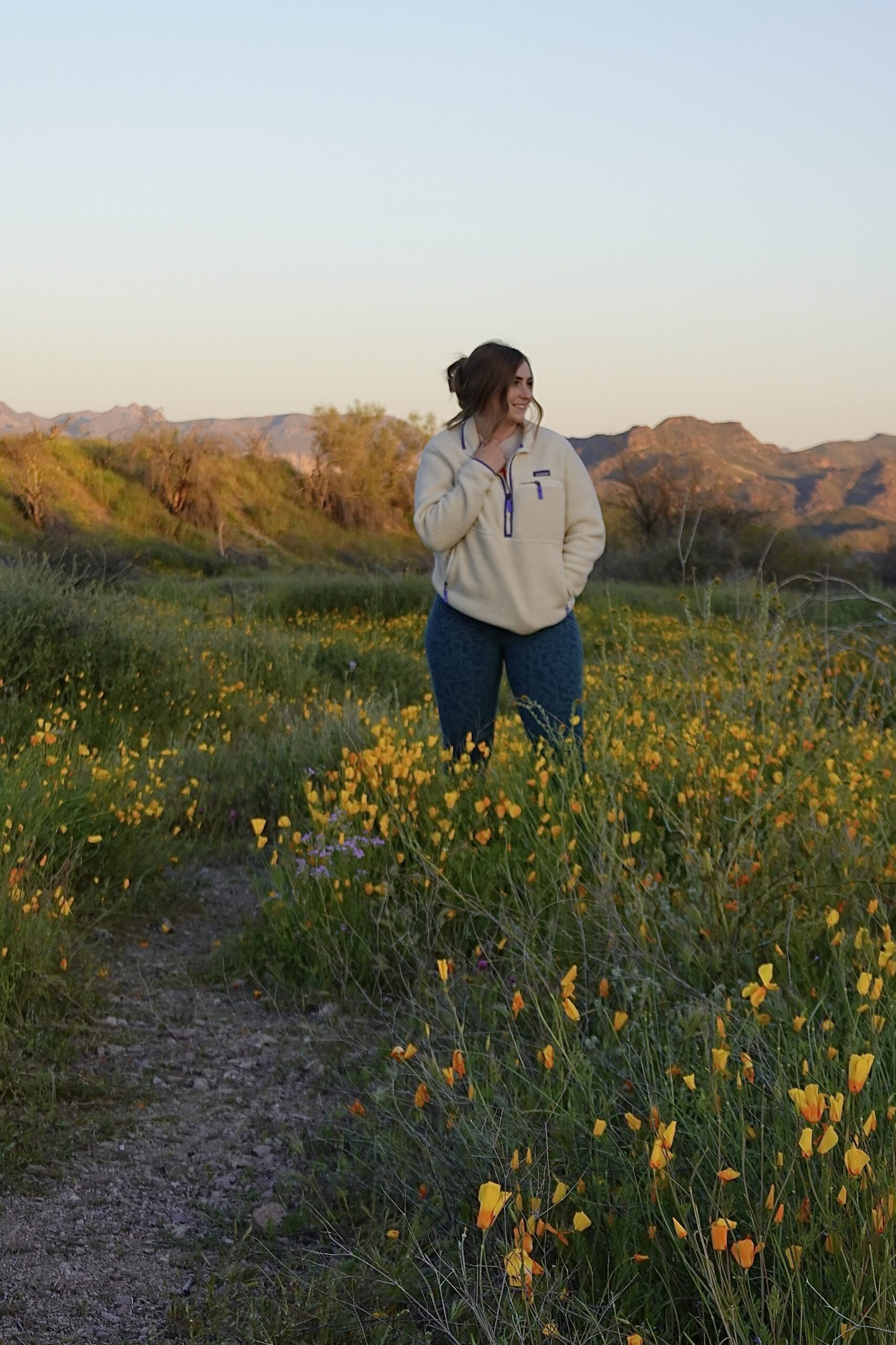
Wildflowers in Arizona: The Most Common Desert Blooms
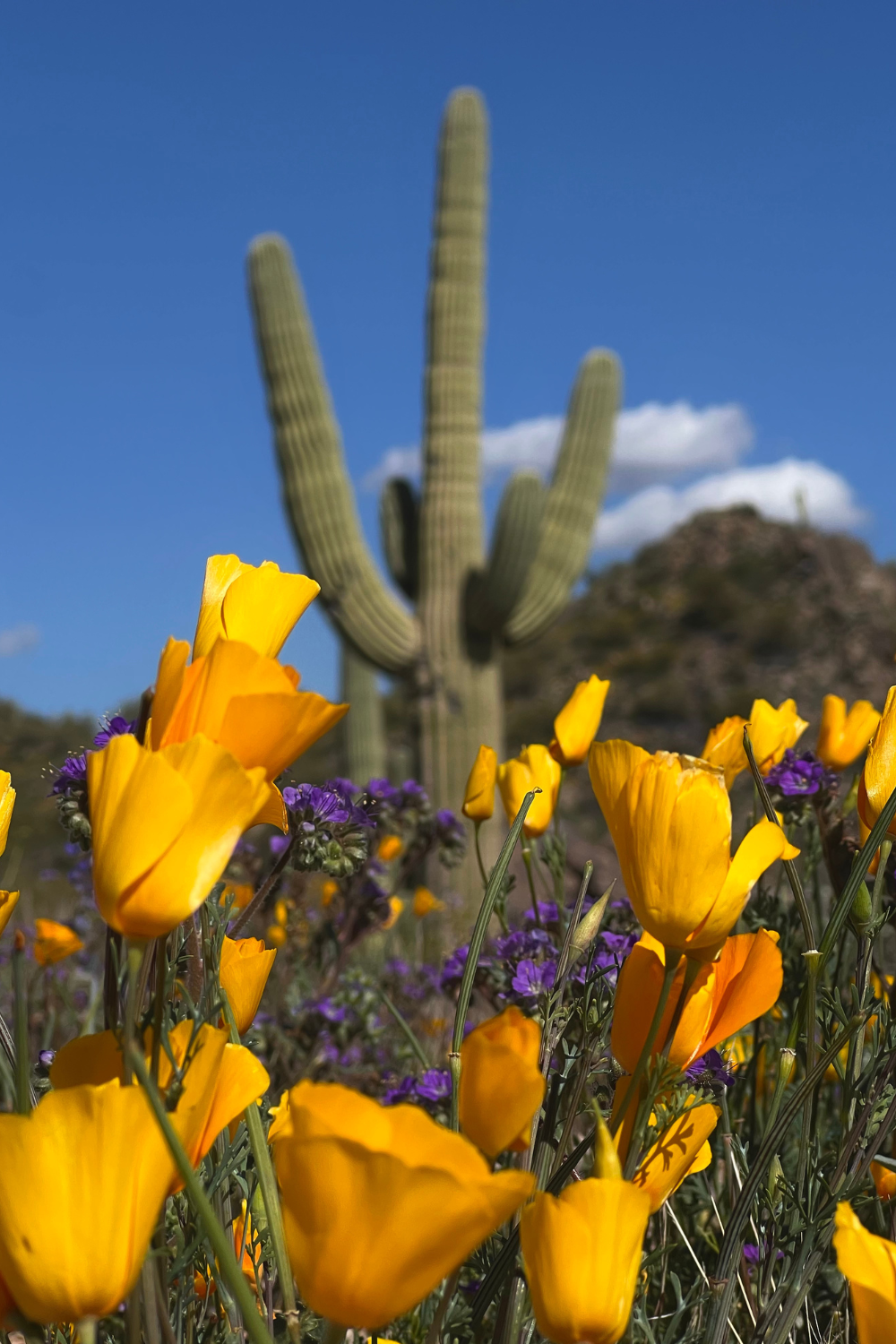
Arizona’s wildflowers transform the desert each year, turning rocky trails, open washes, and cactus-filled landscapes into bursts of color. The timing and variety change every year based on rainfall and elevation. This guide breaks down the most common wildflowers in Arizona, including photos, bloom seasons, and where you’re most likely to see them—so you know exactly what to look for on your next hike or road trip.
Disclaimer: Affiliate links are used in this post, which I do benefit from. It’s a great way to show support, if you want to!
🌼 Arizona Wildflowers at a Glance
Arizona’s wildflowers come in a wide range of colors, with different hues peaking at different times of year. Use this quick guide to identify what you’re seeing on the trail—or decide when to visit based on your favorite colors.
Yellow & Orange Wildflowers
-
Common blooms: Desert marigold, brittlebush, Mexican gold poppy, evening primrose, globe mallow
-
Peak season: February–April
-
Where you’ll see them: Sonoran Desert, Phoenix area, low desert trails
-
Good to know: These are the most reliable desert wildflowers and often bloom even in drier years
Pink & Purple Wildflowers
-
Common blooms: Owl’s clover, lupine, scorpion weed, blue dicks
-
Peak season: February–April (desert), June–July (higher elevations)
-
Where you’ll see them: Central Arizona, desert flats, Mogollon Rim
-
Good to know: Many pink and purple wildflowers grow low to the ground—look along trail edges and washes
Red Wildflowers
-
Common blooms: Indian paintbrush, chuparosa, fairy duster
-
Peak season: February–April (desert), April–June (higher elevations)
-
Where you’ll see them: Sonoran Desert, grasslands, foothills, Northern Arizona
-
Good to know: Red wildflowers are especially important for hummingbirds and are most vibrant after wet winters
White & Cream Wildflowers
-
Common blooms: Evening primrose, desert chicory, saguaro cactus flowers
-
Peak season: March–May
-
Where you’ll see them: Desert washes, cactus-filled landscapes
-
Good to know: Some white blooms open later in the day or in the evening
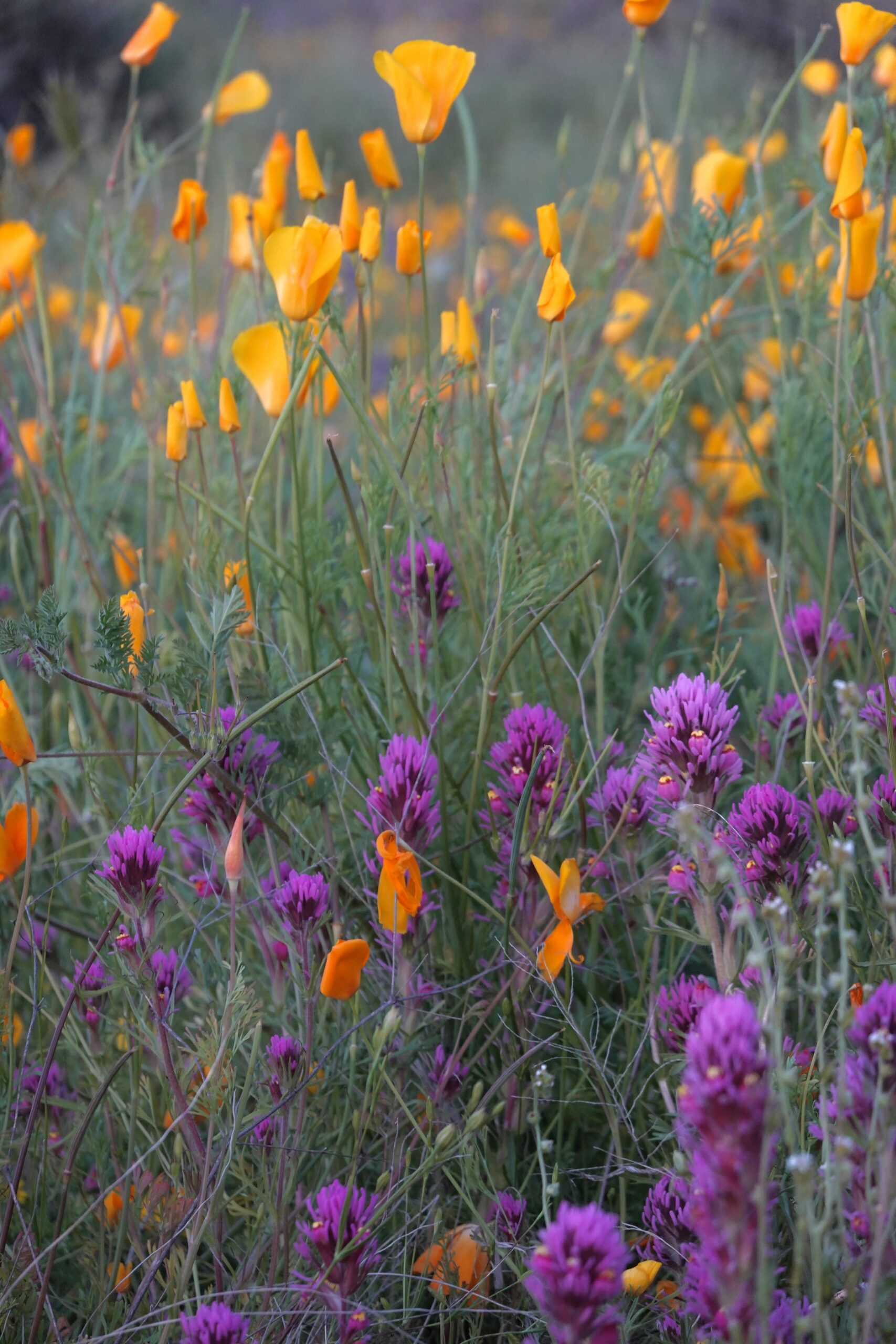
Please keep reading, but know I do also have a wildflower hub page if you are reading this in 2026 and want to stay up to date on current wildflower status in Arizona!
🌼 Mexican Gold Poppy
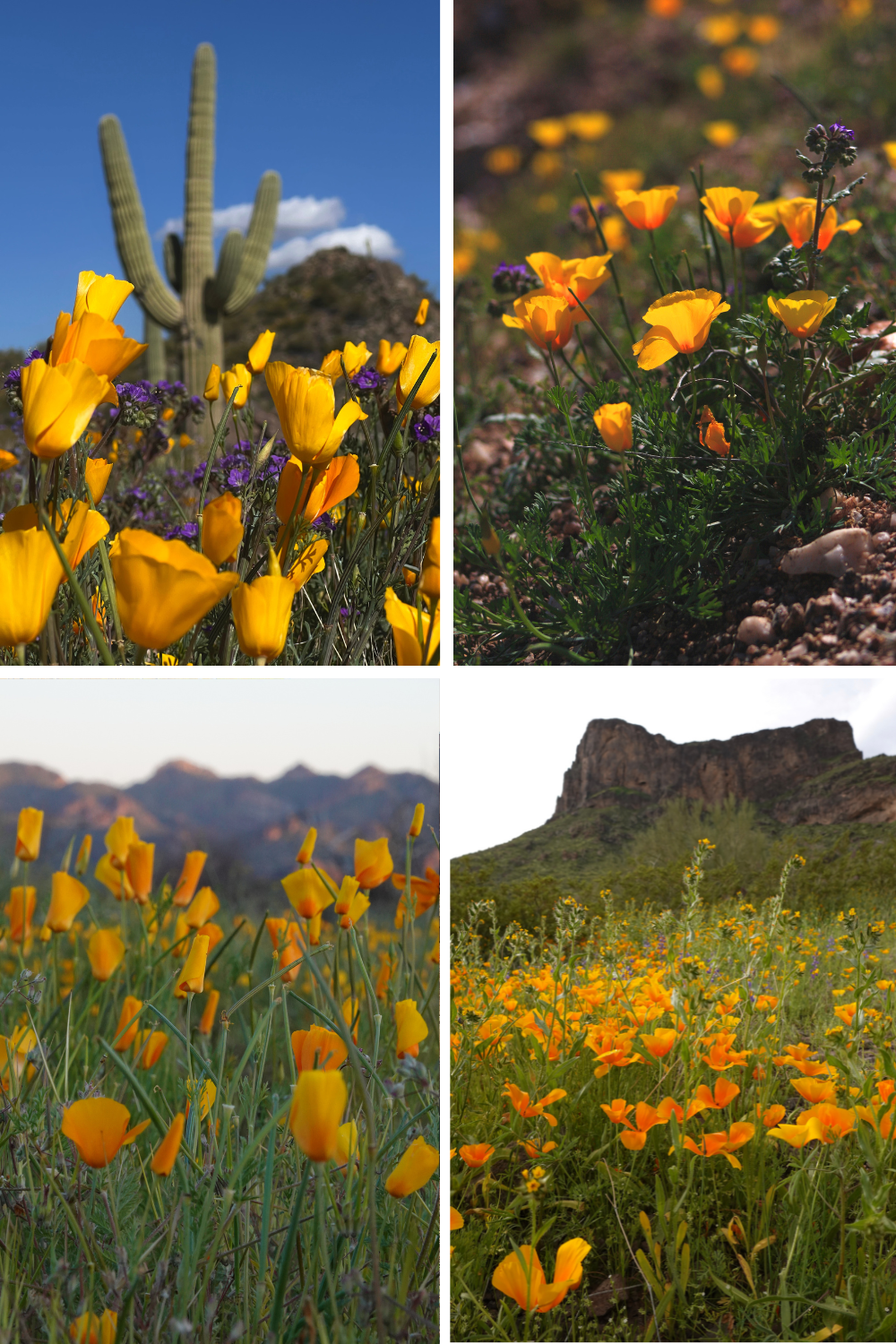
top left location: ej peak, bottom right: picacho peak, top right and bottom left: superstition mountains, 2023
Bloom time: March–April
Flower color: Golden yellow to orange
Where you’ll see it: Sonoran Desert, Superstition Mountains, South Mountain, open desert flats
Mexican gold poppies are one of the most recognizable spring wildflowers in Arizona, known for their vibrant golden-orange petals that stand out against the desert landscape. Unlike California poppies, these blooms are slightly smaller and are well adapted to Arizona’s rocky, arid soil. They often appear in clusters after wet winters, creating colorful patches along hiking trails and desert roadsides.
You’re most likely to spot Mexican gold poppies during peak spring wildflower season in open, sunny areas. Their delicate petals open fully on warm days and may close during cooler temperatures or cloudy conditions. They’re still beautiful closed, too.
🪻 Lupine
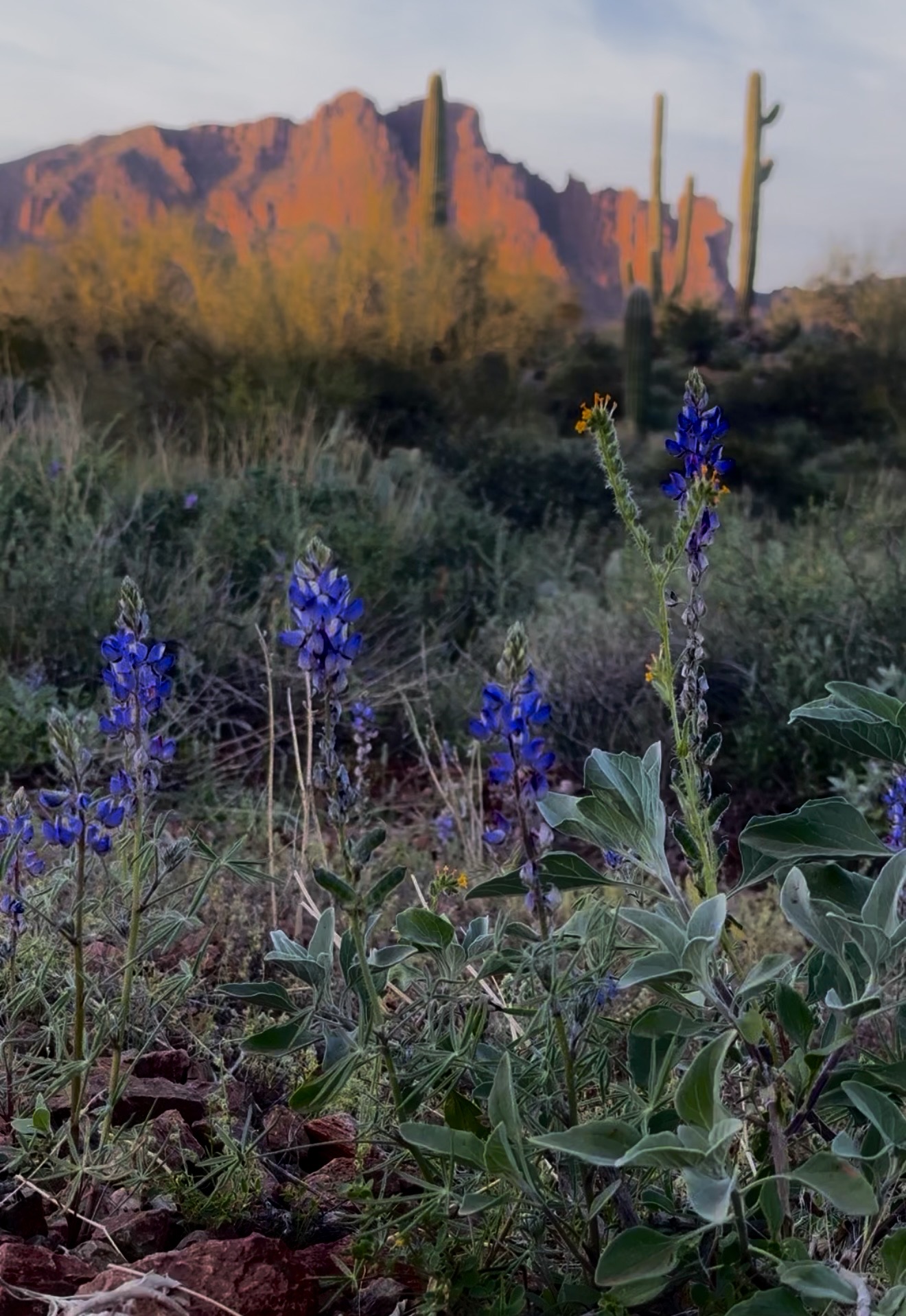
photo location: off peralta road in the superstition mountains, 2023
Bloom time: March–April (desert), May–June (higher elevations)
Flower color: Purple, blue, occasionally pink or white
Where you’ll see it: Sonoran Desert, Superstition Mountains, Prescott area, Mogollon Rim
Lupine is one of Arizona’s most striking spring wildflowers, easily recognized by its tall spires of purple and blue blooms. These flowers often appear after wetter winters and can be found scattered across desert landscapes or growing in dense patches at slightly higher elevations.
In the low desert, lupine typically blooms in early spring, while cooler mountain regions see blooms later in the season. Lupine is commonly spotted along hiking trails, open hillsides, and desert flats, often mixed in with poppies, owl clover, and other spring wildflowers. PS: the desert botanical garden has a wildflower section, too!
💛 Brittlebush
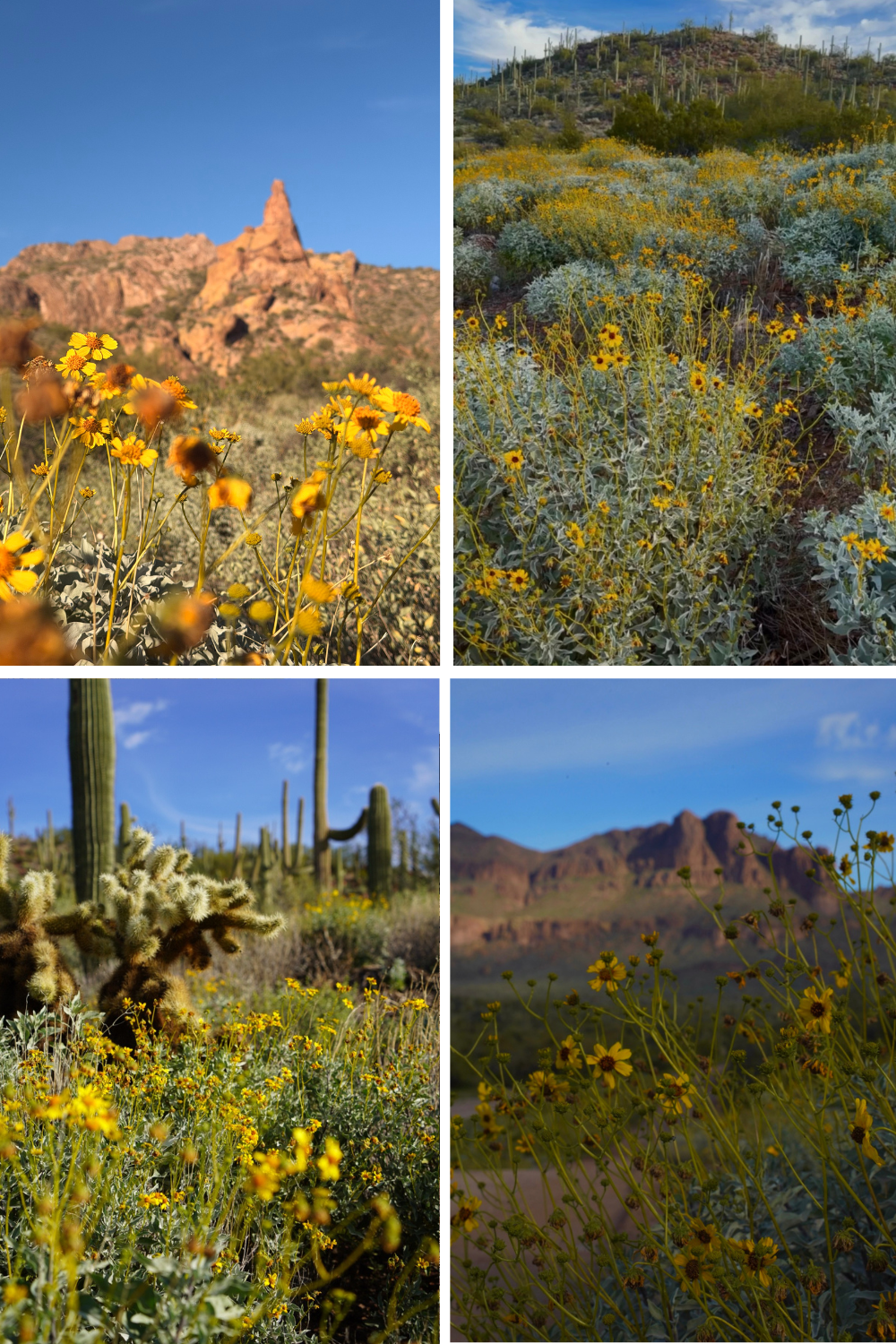
photo locations: top right- goldfield mountains, rest- peralta regional park, 2026
Bloom time: February–April
Flower color: Bright yellow
Where you’ll see it: Sonoran Desert, Phoenix area, Scottsdale, desert hiking trails
Brittlebush is one of the most common and recognizable wildflowers in Arizona, especially in the Sonoran Desert. Its bright yellow daisy-like flowers stand out against silver-green foliage and rocky desert terrain, making it easy to spot along trails and hillsides in early spring. I like that the bushes are taller, as it makes it easier to photograph!
This hardy desert plant blooms reliably even in drier years, often appearing before many other wildflowers. Brittlebush is commonly seen lining desert preserves, mountain trails, and open slopes throughout the Phoenix area.
🌼 Desert Marigold
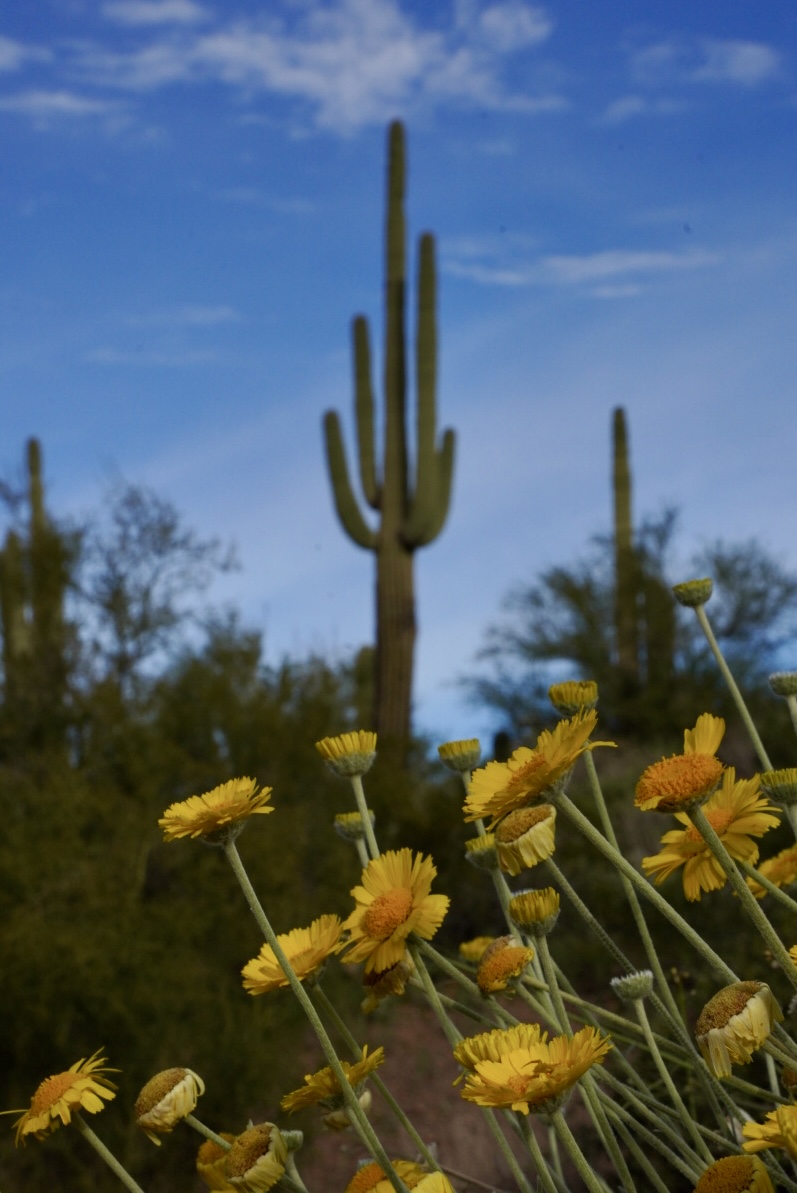
photo location: peralta regional park, 2026
Bloom time: February–May
Flower color: Bright yellow
Where you’ll see it: Sonoran Desert, Phoenix and Tucson areas, desert roadsides and trails
Desert marigold is one of the most reliable wildflowers in Arizona, easily recognized by its bright yellow blooms and fuzzy gray-green leaves. These cheerful flowers are commonly seen lining highways, desert washes, and hiking trails throughout the low desert during spring.
Unlike some wildflowers that only appear after especially wet winters, desert marigolds bloom consistently year after year. Their long-lasting flowers often stick around well into late spring, making them one of the easiest Arizona wildflowers to spot.
💜 Scorpion Weed (Phacelia)
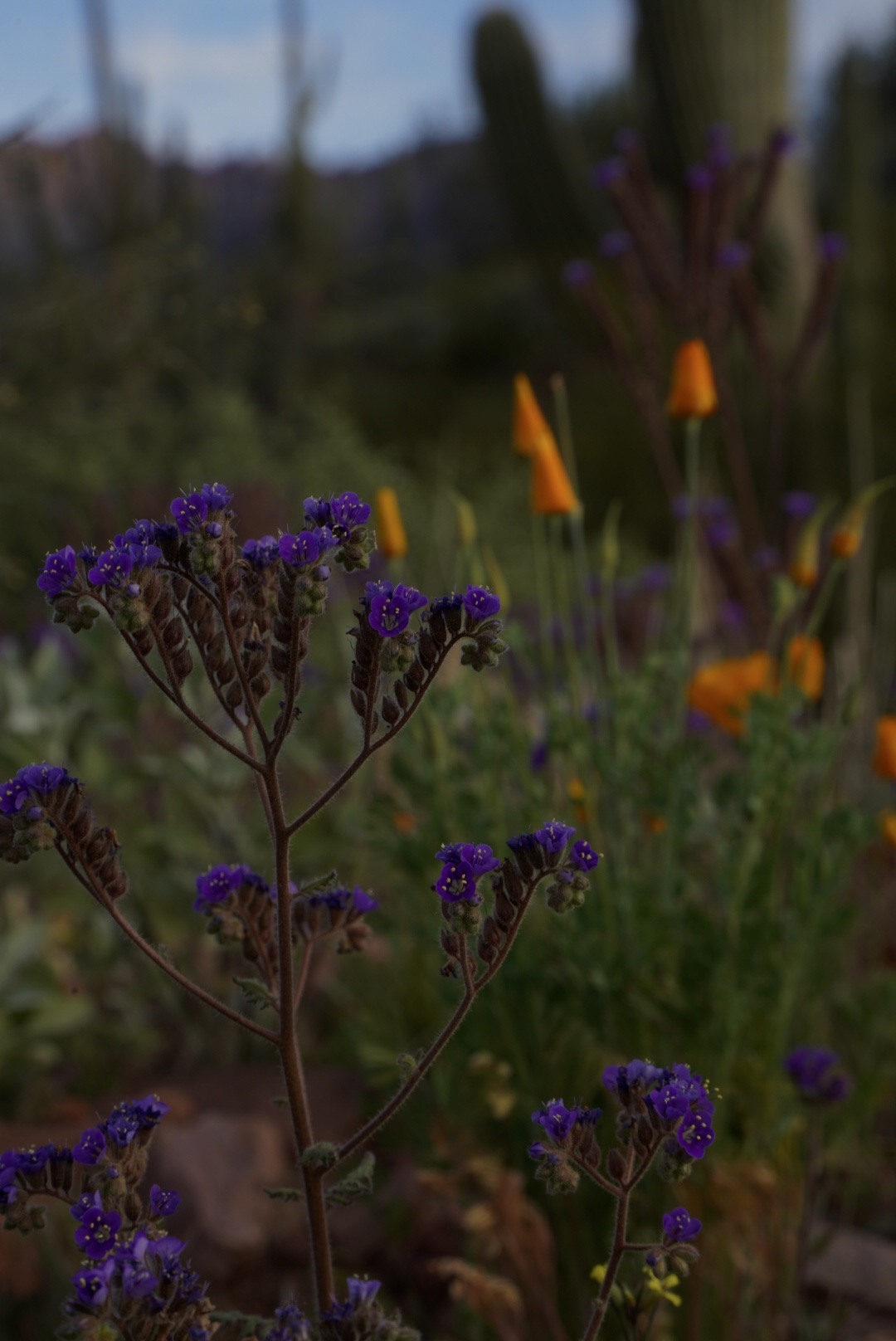
photo locations: peralta regional park, 2026
Bloom time: February–April
Flower color: Purple to lavender
Where you’ll see it: Sonoran Desert, Phoenix area, Superstition Mountains, desert flats and washes
Scorpion weed is a unique Arizona wildflower known for its curled flower stalks that resemble a scorpion’s tail. As the plant blooms, the stalk slowly uncurls, revealing clusters of small purple flowers that attract bees and other pollinators. This is one of my favorites!
This wildflower is most commonly seen during spring in open desert areas, especially after winter rainfall. Scorpion weed often grows low to the ground and blends into desert landscapes, but its vivid purple blooms make it stand out when conditions are right.
💙 Blue Dicks
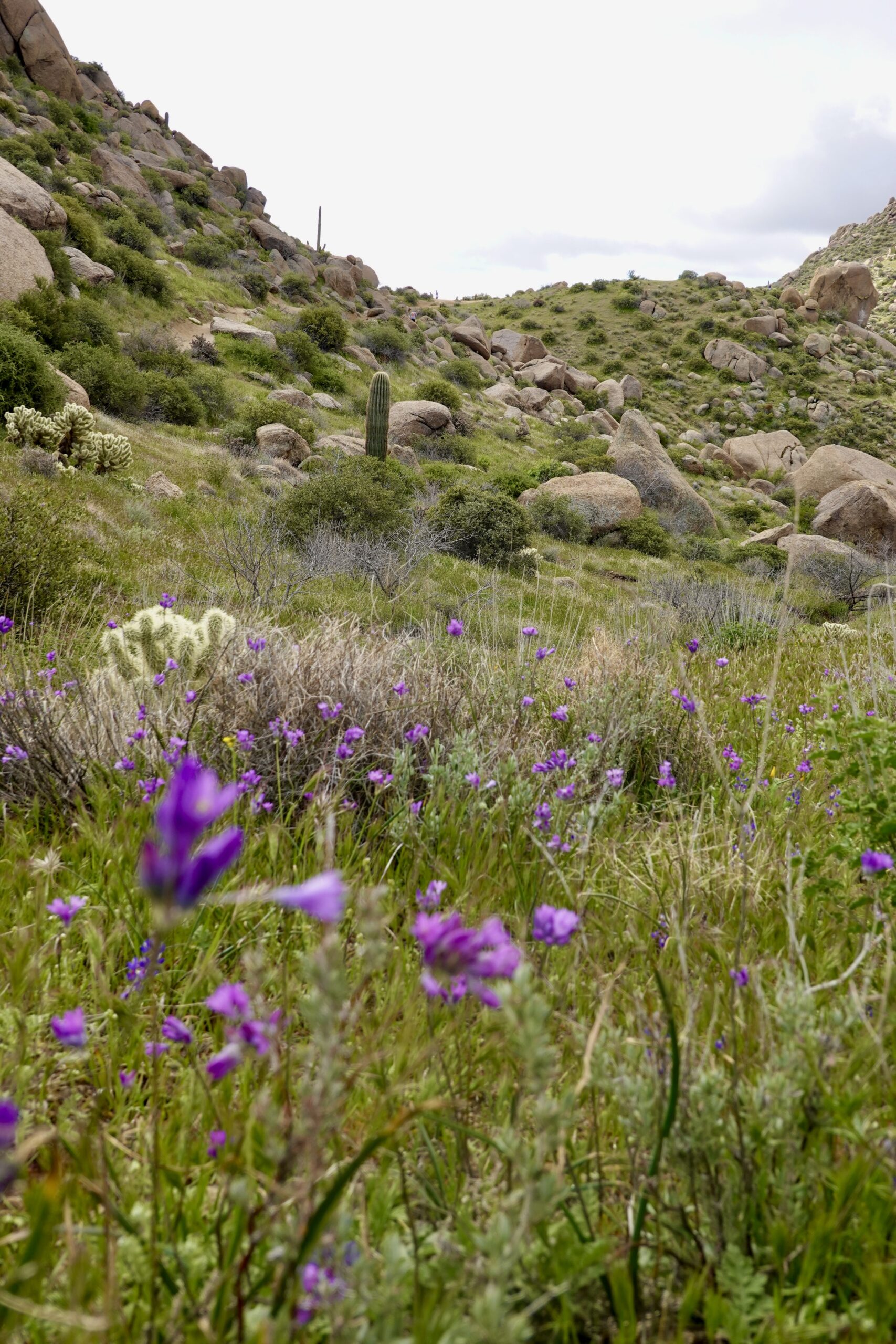
photo location: tom’s thumb trail, scottsdale, 2024
Bloom time: March–April
Flower color: Blue to violet
Where you’ll see it: Central Arizona, Superstition Mountains, desert grasslands, open hillsides
Blue dicks are a lesser-known but striking Arizona wildflower, recognized by their round clusters of small blue to violet flowers atop slender green stems. These blooms often appear in spring following winter rain and are commonly found in open grasslands and desert foothills. Don’t you love the name? LOL.
In Arizona, blue dicks tend to grow in scattered patches rather than large fields, making them easy to miss unless you’re looking closely. Their cool blue tones provide a beautiful contrast to the warmer yellows and oranges of spring desert wildflowers.
💗 Owl’s Clover
photo location: bush highway near saguaro lake, 2023
Bloom time: March–April
Flower color: Pink to pale purple
Where you’ll see it: Sonoran Desert, Central Arizona, desert flats and grasslands
Owl’s clover is a delicate spring wildflower known for its soft pink and pale purple tones. Unlike taller blooms like lupine, owl’s clover grows close to the ground, often forming subtle patches along open desert flats and grassy areas.
This wildflower is most commonly seen after winter rainfall and tends to blend in with surrounding vegetation, making it easy to overlook unless you’re scanning the ground. Owl’s clover is often found growing alongside poppies, lupine, and other spring desert wildflowers.
🧡 Globe Mallow
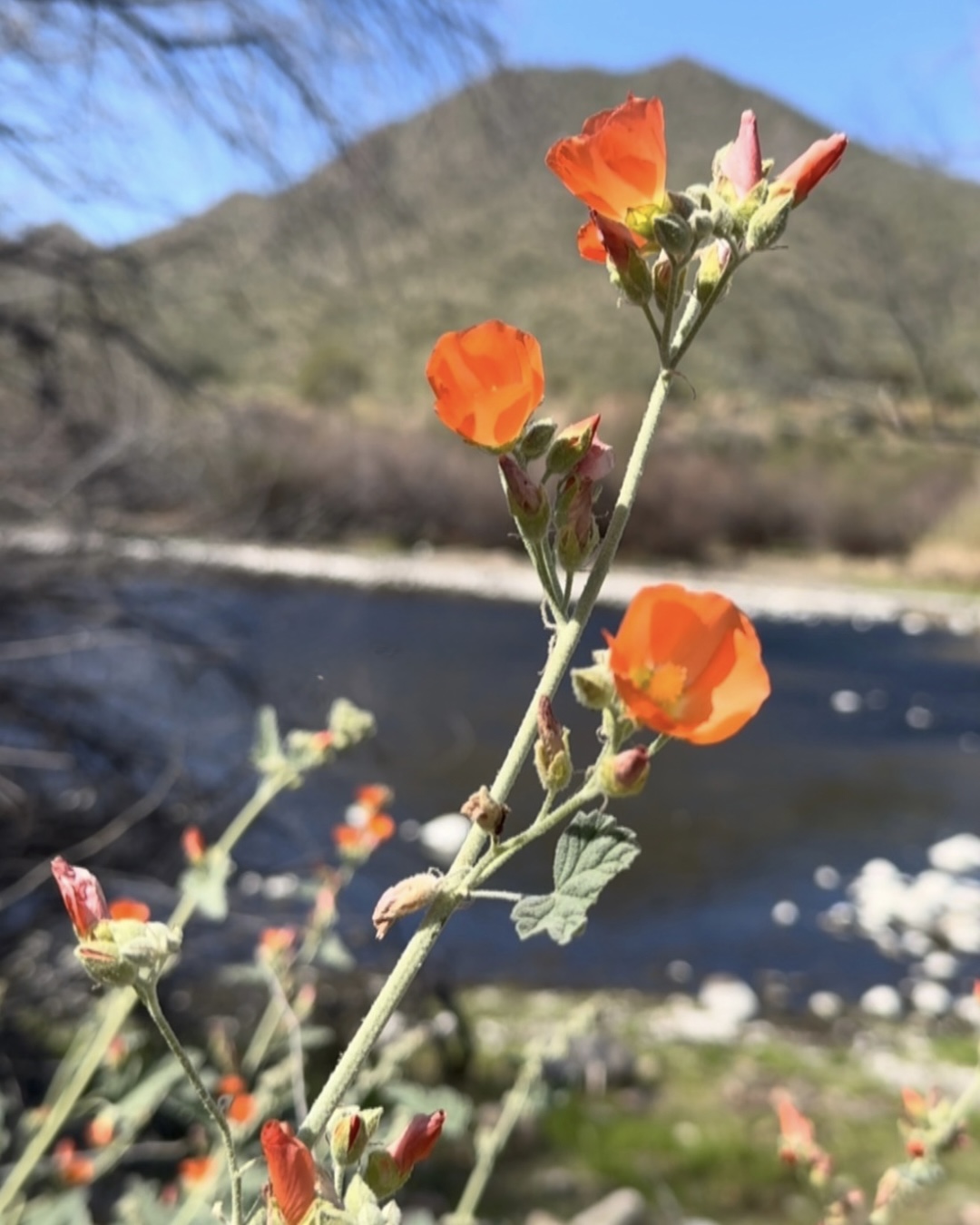
photo location: salt river, 2024
Bloom time: February–May
Flower color: Orange to salmon pink
Where you’ll see it: Sonoran Desert, Central Arizona, desert roadsides and open washes
Globe mallow is a hardy desert wildflower known for its soft orange, cup-shaped blooms that thrive in Arizona’s dry climate. These flowers are commonly seen lining desert roadsides and washes, often blooming earlier and lasting longer than many other spring wildflowers.
Thanks to its drought tolerance, globe mallow can appear even in lower-rainfall years. Its warm color stands out beautifully against rocky desert terrain and pairs especially well with yellow blooms like brittlebush and desert marigold.
❤️ Chuparosa
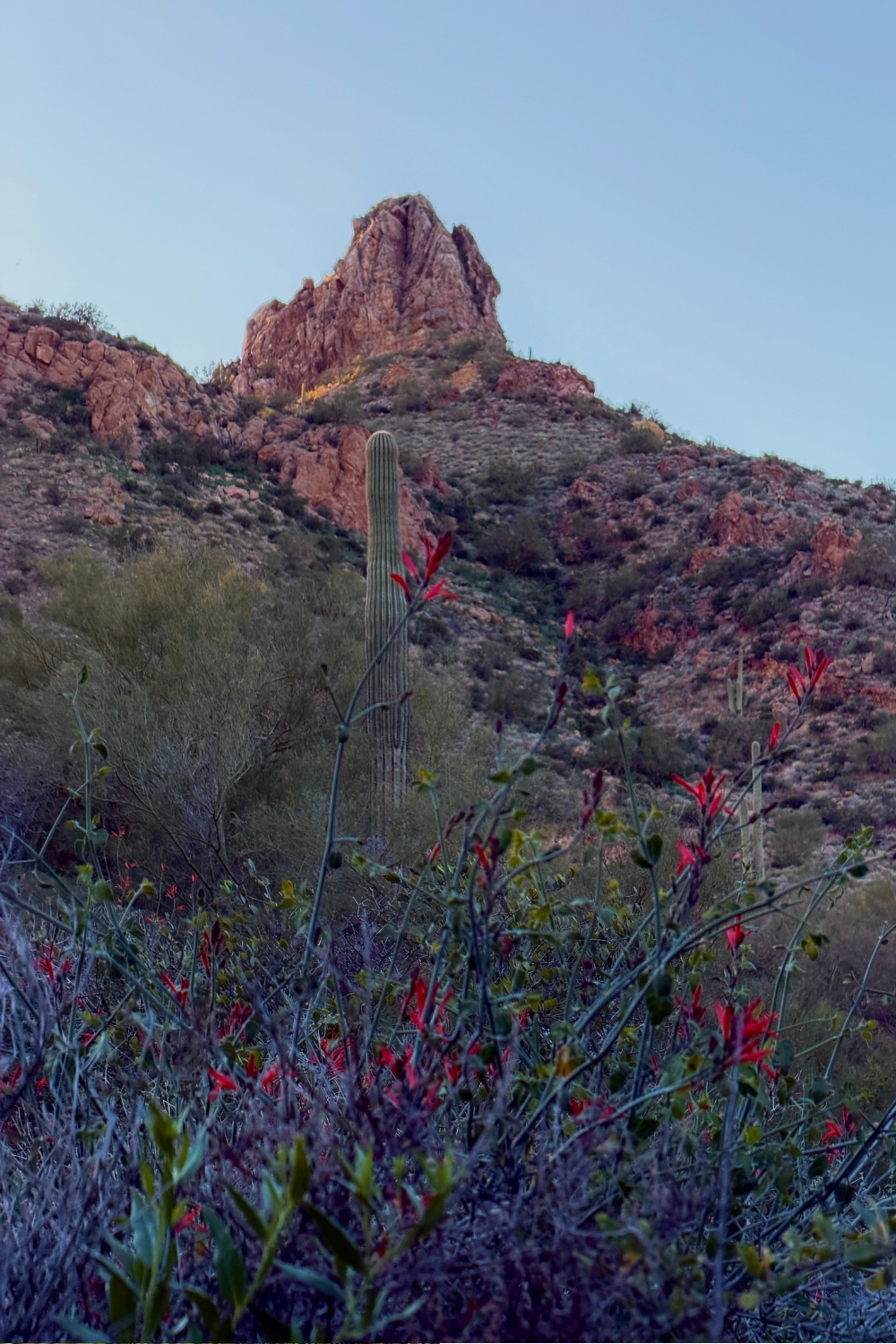
photo location: goldfield mountains, 2026
Bloom time: February–April (can bloom earlier in warm winters)
Flower color: Red to coral
Where you’ll see it: Sonoran Desert, Phoenix and Tucson areas, desert washes and rocky slopes
Chuparosa is a vibrant desert wildflower known for its tubular red blooms that are especially attractive to hummingbirds. Unlike many spring wildflowers, chuparosa often blooms earlier in the season and can appear even before peak wildflower conditions arrive.
This plant is commonly found in desert washes and along rocky slopes throughout the Sonoran Desert. Its bright red flowers stand out against muted desert tones, making it easy to spot while hiking or exploring desert trails in late winter and early spring.
🧚♀️ Fairy Duster
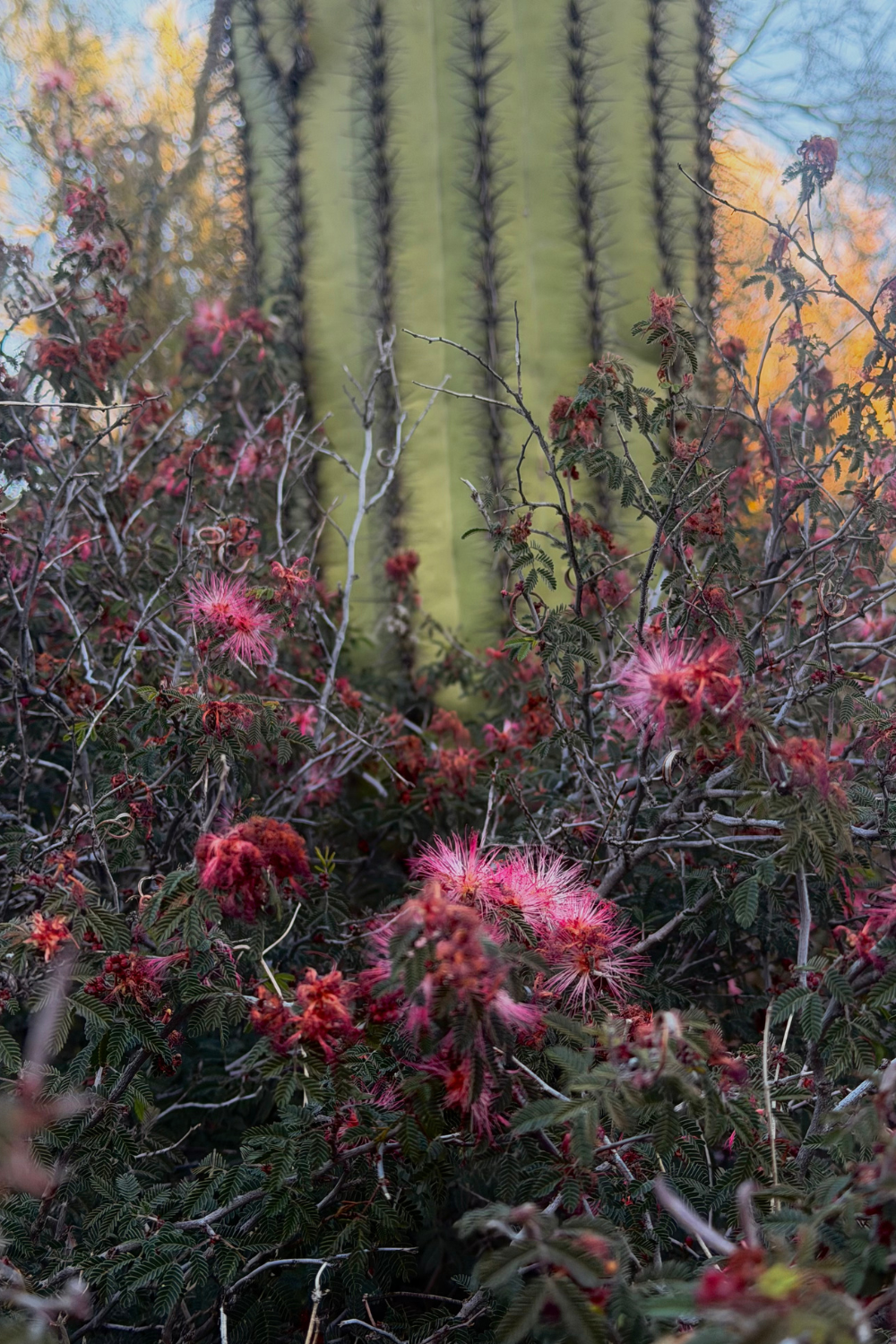
photo location: goldfield mountains, 2026
Bloom time: February–April
Flower color: Pink to red
Where you’ll see it: Sonoran Desert, Central Arizona, desert slopes and washes
Fairy duster is a soft, feathery desert wildflower named for its delicate, puff-like blooms that resemble tiny pink fireworks. The plant’s thin, thread-like petals create a unique texture that stands out from more traditional daisy-shaped desert flowers.
This wildflower is commonly found on desert slopes and in washes throughout the Sonoran Desert. Fairy duster blooms early in the season and is especially noticeable during warm, sunny days when its vibrant pink flowers are fully open.
🌱 Tips for Seeing Wildflowers Responsibly
Arizona’s wildflowers are beautiful but fragile, and small actions can help protect them for future seasons.
-
Stay on established trails to avoid trampling plants and compacting soil
-
Don’t pick or disturb wildflowers, even if they’re abundant
-
Watch where you step—many blooms grow low to the ground and are easy to miss
-
Be mindful of wildlife, including snakes and insects that are more active in spring
-
Leave no trace and pack out everything you bring with you
Respecting the landscape helps ensure Arizona’s wildflower seasons remain vibrant for years to come.
Final Thoughts About Wildflowers in Arizona
Arizona’s wildflower seasons change every year, but with the right conditions, the desert and mountains can be surprisingly colorful. Bookmark this guide and check back each spring to see what’s blooming across Arizona.