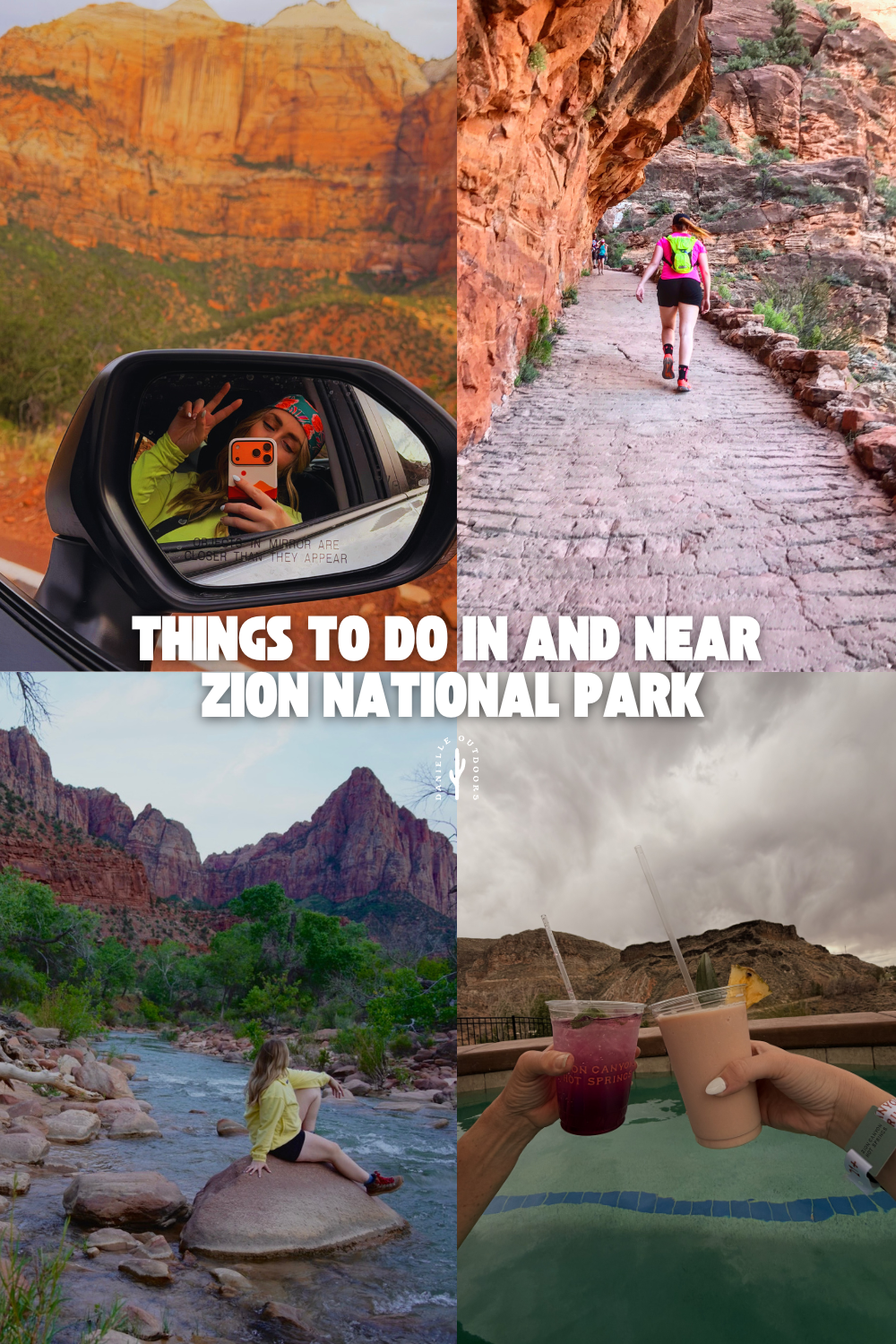
Things to Do in Zion National Park — From Someone Who Keeps Going Back
Zion National Park has this way of pulling you back. I’ve visited three times now, and every single trip I leave wondering why I don’t go more often. Whether you’re navigating the Narrows for the first time or finally tackling Angel’s Landing, there’s always something new to discover in this place. I’ve hiked the trails, eaten the food, found the coffee shop worth stopping for, and learned a few things the hard way — so you don’t have to. Here’s everything I know about making the most of your time in Zion.
🌿 Zion National Park — Quick Guide
Introduction to Zion National Park
Where is Zion National Park?
Best Time to Visit Zion National Park
Top Things To Do in Zion National Park
Zion is the kind of park where you could spend a week and still feel like you haven’t scratched the surface. From world-famous hikes to scenic drives and charming Springdale eats, here’s everything worth putting on your list — whether it’s your first visit or your third.
Hike the Narrows
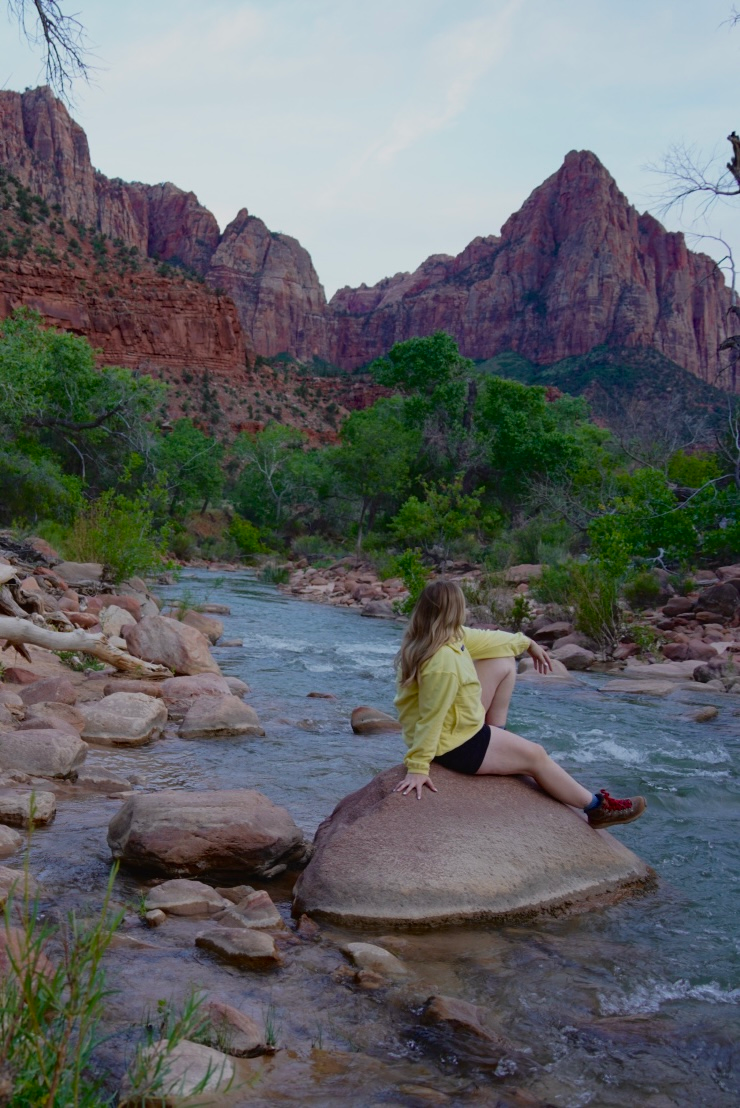
The Narrows is Zion’s most iconic experience — and it fully lives up to the reputation. This is the hike where you’re literally walking through the Virgin River, surrounded by towering canyon walls that narrow to just 20 feet wide in some sections. It’s unlike anything else in the national park system and honestly unlike anything I’ve ever done.
I did the bottom-up route starting from the Temple of Sinawava, which is the most accessible version and what most visitors do. I hiked about a mile in and back — roughly an hour each way — and that alone was enough to make it one of my favorite outdoor experiences. You don’t need to go deep to be blown away. The canyon walls close in almost immediately and the whole thing feels surreal.
A few things to know before you go: the water level fluctuates constantly throughout the hike, going from shin deep to hip deep and back again within the same stretch. There’s no avoiding getting wet — that’s the whole point — so come prepared. From May through October when temperatures are warmer, most people rent water shoes, neoprene socks, and a walking stick from one of the outfitters in Springdale. In colder months, full waders are the move. You can rent everything you need right in town or bring your own gear if you have it.
If you’re short on time or flash flood conditions close the Narrows: walk the Riverside Walk instead. It’s a paved 2-mile round trip trail that follows the Virgin River to the Narrows entrance — flat, accessible, and genuinely beautiful even if you never set foot in the water.
Summit the Iconic Angel’s Landing
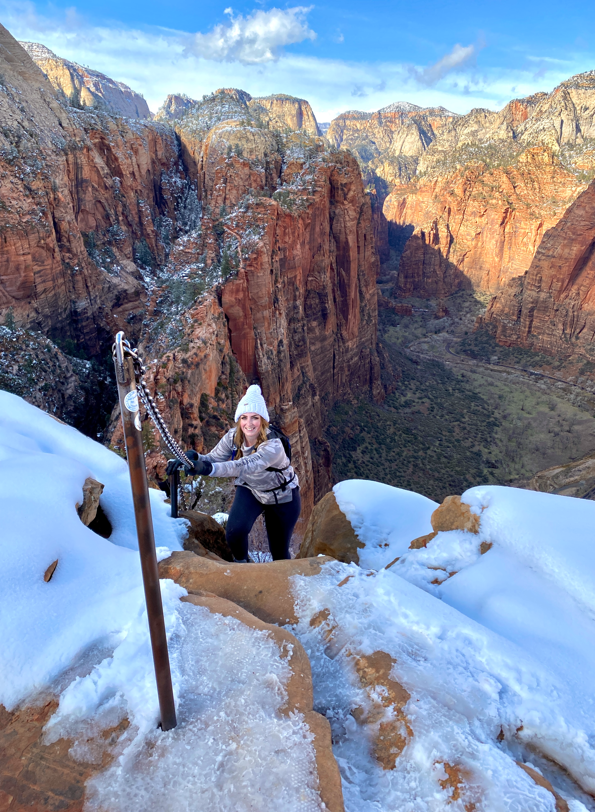
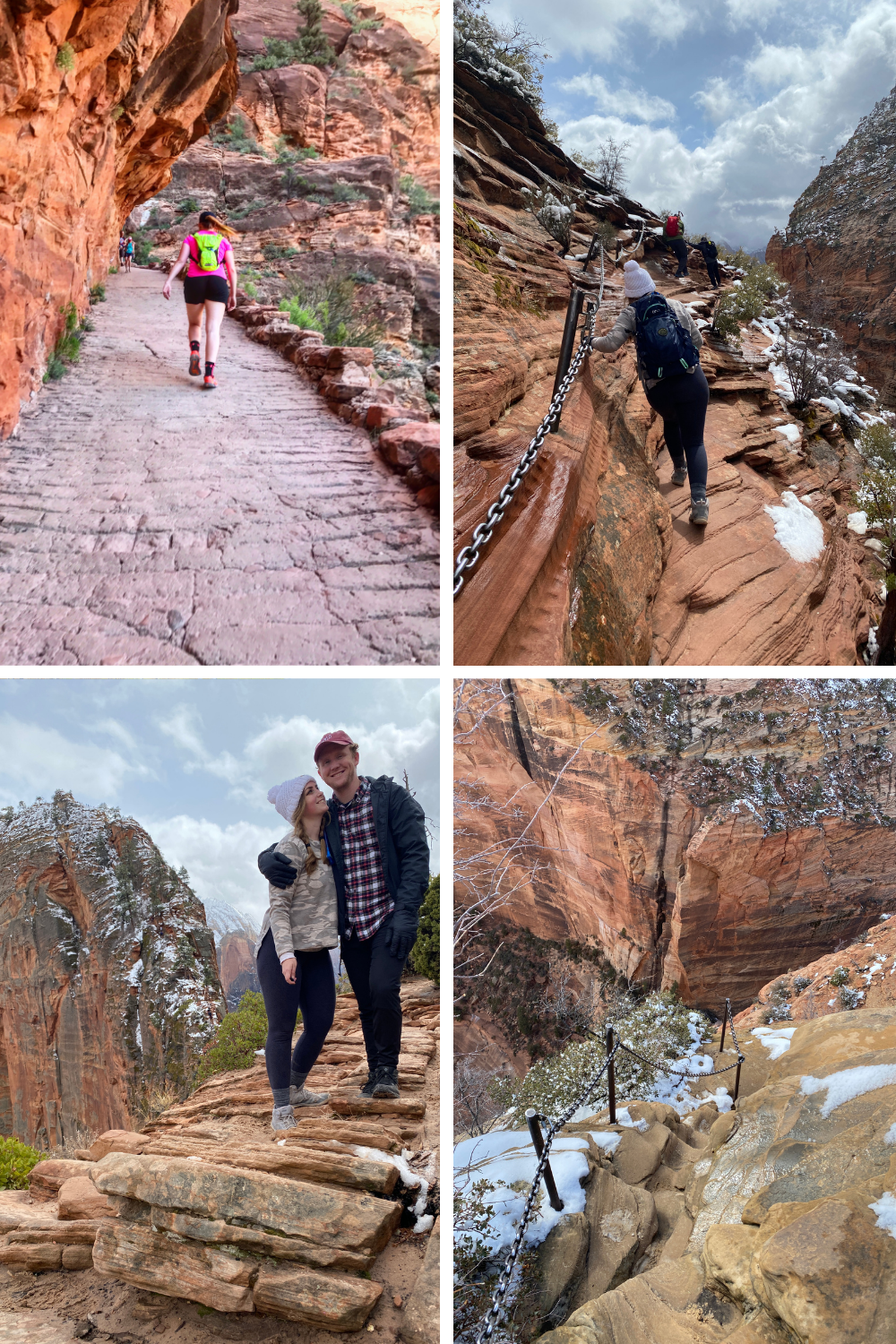
If the Narrows is Zion’s most unique experience, Angels Landing is its most exhilarating. This is the hike that gets your heart pumping before you even reach the hard part — and if you make it to the top, the views over Zion Canyon are absolutely unreal. I’ve done the full summit twice, once in winter and once in warmer weather, and it hits differently every single time.
Here’s what you need to know going in: Angels Landing now requires a permit through a lottery system, so you’ll need to plan ahead. If you don’t snag a permit — or if you want a spectacular experience without the chains — Scout Lookout is a fantastic stopping point in its own right. The views from there are genuinely breathtaking and it’s a worthy destination even if you go no further.
The full hike takes more than half your day, so plan accordingly and start early. The trail begins with a long, steady climb up Walter’s Wiggles — a series of 21 switchbacks that are steep but manageable — before reaching Scout Lookout. From there, the chains section begins. It’s a narrow, exposed ridge with chains bolted into the rock to help you pull yourself up to the summit. I’m not afraid of heights so the chains felt exhilarating to me, but I want to be honest — people do get injured on this hike every year. It demands your full attention, patience, and a healthy respect for the exposure. If heights make you uncomfortable, Scout Lookout is your summit.
Seasonal note: I’ve done Angels Landing in both winter and warmer weather and both are incredible. Winter means fewer people on the chains — which makes a big difference — but ice is a real concern so microspikes are essential. In warmer months start as early as possible to beat both the heat and the crowds on the chains section.
Watch Sunrise on the Canyon Overlook Trail
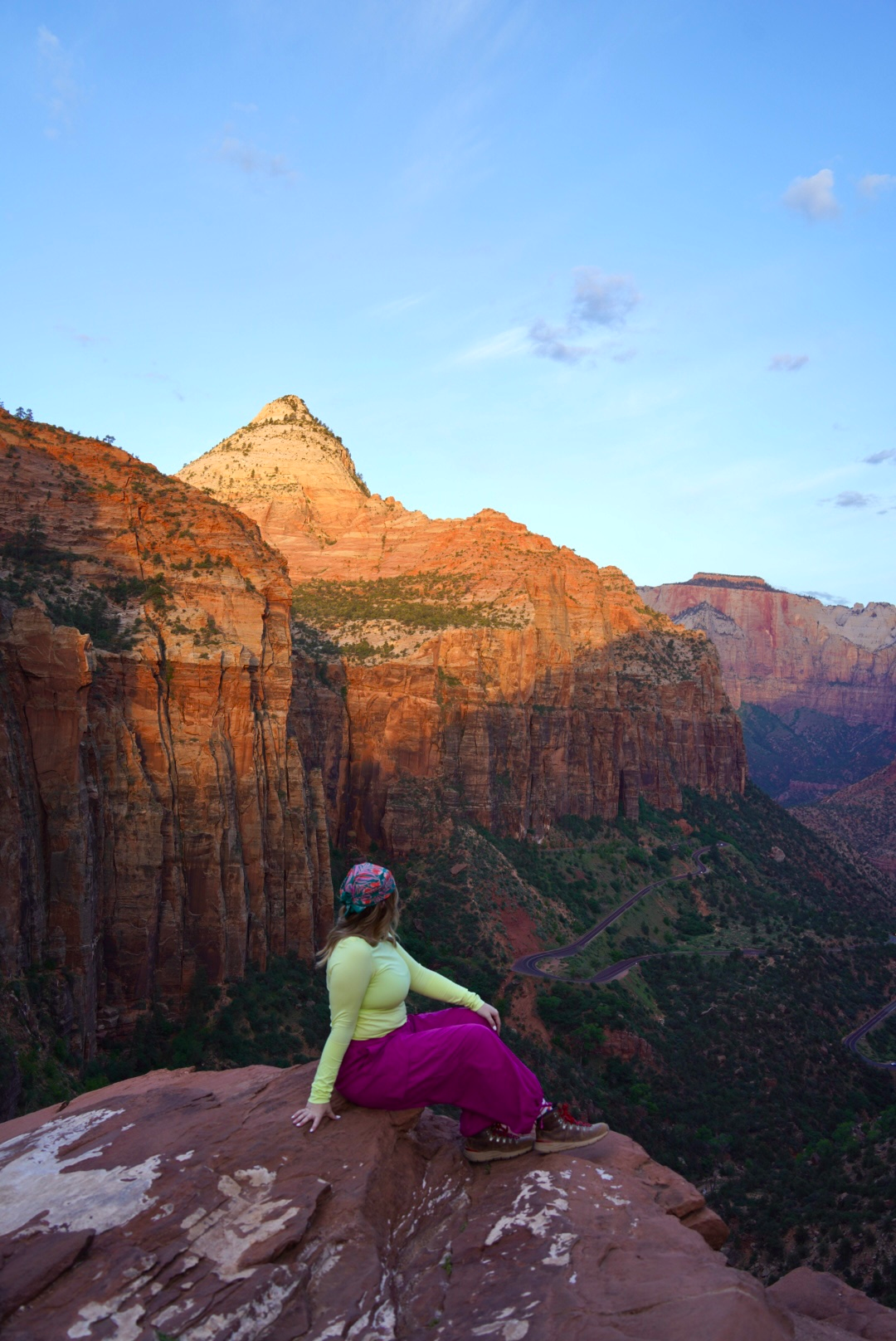
If you’re looking for big Zion views without a big commitment, Canyon Overlook Trail is your answer. This is one of my favorite hikes in the park — it’s short, beautiful, and delivers a payoff that rivals trails twice its length. I’ve done it in both winter and summer and it never disappoints.
The trail itself is about a mile round trip with some narrow sections and a little scrambling, but nothing that requires serious hiking experience. It’s the kind of hike that’s accessible to most people while still feeling like a real adventure — not just a paved walking path.
The views at the top look out over the dramatic canyon walls and the Zion-Mount Carmel Highway winding below — it’s genuinely stunning and one of those spots that makes you stop and just take it all in.
My biggest tip: go at sunrise. Parking fills up fast at Zion and sunrise gets you there before the crowds hit. But more importantly, the early morning light hits the canyon walls in a way that’s absolutely magical for photos. The rocks glow warm and golden and the whole canyon feels like it’s on fire in the best possible way. Afternoon is the hardest time to visit — the sun shines directly at you making it uncomfortable and nearly impossible to get good photos. Sunrise wins every time.
Drive the Zion-Mt. Carmel Highway
Most people think of Zion as a hiking destination — and it is — but one of the most breathtaking experiences in the entire park doesn’t require leaving your car. The Zion-Mt. Carmel Highway is a stunning scenic drive that winds through the park and honestly needs to be on every visitor’s itinerary.
The key is driving it east to west. That direction gives you the most dramatic approach — the canyon walls build around you and then suddenly you’re entering the famous Zion-Mt. Carmel Tunnel, one of those moments that genuinely makes you catch your breath. Coming through the other side and descending into Zion Canyon with those towering red walls closing in around you is something I won’t forget.
A few things to know before you go: there aren’t many designated pulloffs along the route, so stopping for photos or video is limited. My best tip — if you want to capture the drive, be the passenger. Trying to film and drive this road at the same time means you’ll miss both the footage and the experience. Let someone else drive and just take it all in.
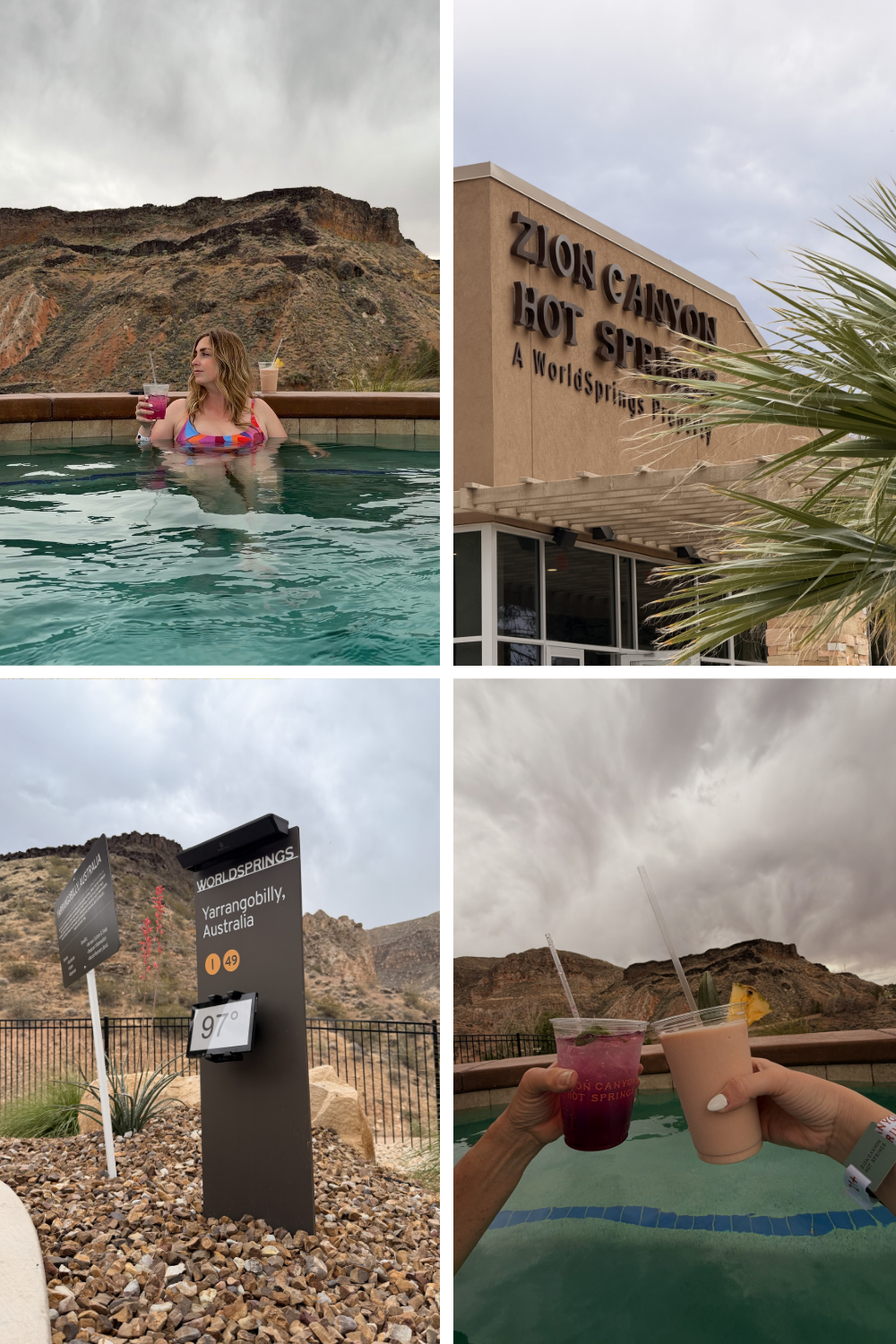
Visit Zion Canyon Hot Springs
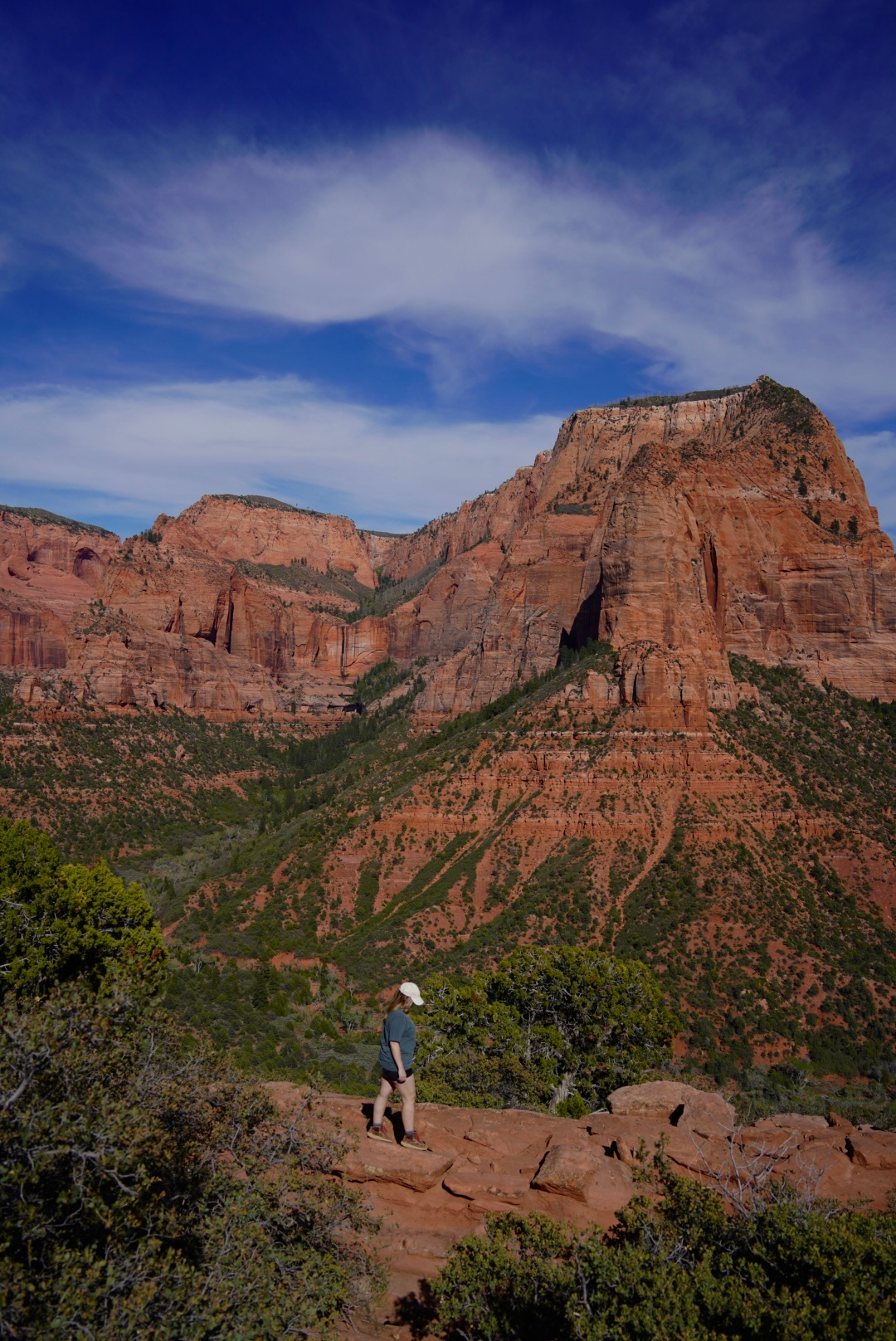
Go to Kolob Canyons
Walk the Pa’rus Trail
Go Stargazing
Where to Stay Near Zion National Park
Where you stay near Zion shapes your entire experience — from how early you can get into the park to how much you’ll spend per night. The two main bases are Springdale on the west side and Kanab on the east side, and they offer very different vibes and price points. Here’s a breakdown of both to help you decide.
Springdale — West Entrance
Springdale is the most popular place to stay and for good reason — it’s literally steps from the park entrance, walkable to all the restaurants and coffee shops we talked about, and puts you first in line for the shuttles every morning. The tradeoff is price. Springdale is one of the more expensive gateway towns in the national park system, so expect to pay a premium especially in peak season. Book as early as possible — this town fills up fast.
Top Picks in and around Springdale:
- Red Cliffs Lodge — I’ve stayed here personally and loved it. It sits right along the Virgin River with stunning canyon views and easy access to the park. The setting alone is worth it (photos below)
- Under Canvas Zion — luxury glamping at its finest. Think safari-style tents with real beds, private bathrooms, and unobstructed views of the canyon walls. Perfect for a splurge or a special trip
- Zion Wildflower Resort — a beautiful boutique property with a relaxed, elevated feel. Great option if you want something a little different from a standard hotel
- Zion Ponderosa Ranch Resort — located on the east side near the park’s east entrance, this one is great for families with cabins, glamping options, and activities right on property
- Autocamp Zion – this is a beautiful property with individual renovated airstreams with great community amenities
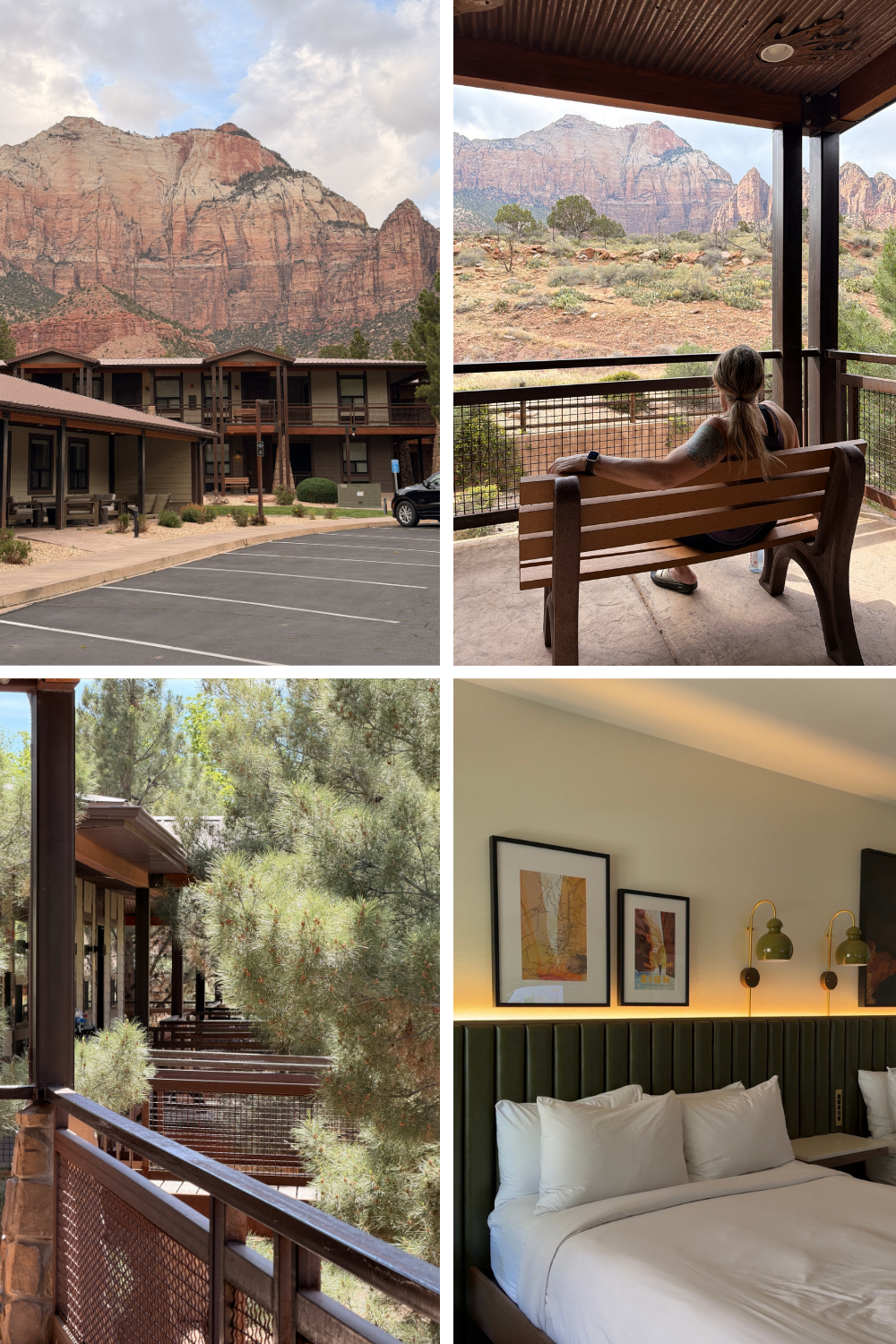
red cliffs lodge zion, in springdale
Kanab — East Entrance
Kanab is about an hour from the main Zion canyon but offers a completely different experience — more affordable, less crowded, and a great base if you’re combining Zion with Bryce Canyon or the Grand Canyon’s North Rim. It has a charming small town feel with great restaurants and a slower pace that honestly feels like a breath of fresh air after busy Springdale.
Top Picks in and around Kanab:
- Zion Ponderosa Ranch Resort — located on the east side near the park’s east entrance, this one is great for families with cabins, glamping options, and activities right on property
- Best Friends Roadhouse — I’ve stayed here and it’s a great value. Clean, comfortable, and perfectly located in the heart of Kanab. It’s affiliated with the Best Friends Animal Sanctuary nearby which makes it extra special for animal lovers
- Basecamp 37 — glamping tents right near Kanab that give you that close-to-nature feeling without sacrificing comfort. A great middle ground between camping and a hotel, and the kind of unique stay that makes a trip feel extra special
Plan Your Trip to Zion
Whether it’s your first visit or your third like me, a little planning goes a long way at Zion. Here’s everything you need to know before you go so you can spend less time figuring it out and more time actually enjoying the park.
How Many Days Do You Need in Zion?
Two to three days is the sweet spot for most visitors. Two days gives you enough time to hit the highlights — the Narrows, Angels Landing or Canyon Overlook, the scenic drive, and some time in Springdale. Three days lets you slow down, add Kolob Canyons, do the stargazing tour, and actually soak in the park without feeling rushed. I’d always lean toward three days if your schedule allows — Zion is one of those places where an extra day never feels wasted.
Do You Need a Permit for Angels Landing?
Yes — Angels Landing now requires a permit through a lottery system. You’ll need to apply in advance through Recreation.gov. The lottery is competitive especially in peak season so apply as early as possible and have a backup plan in case you don’t get one. Scout Lookout is always there for you if the permit doesn’t come through — the views are stunning and no permit is required.
Get the America the Beautiful Pass
If you’re visiting more than one national park in a year — and if you’re an Arizona local you probably are — the America the Beautiful Pass is absolutely worth it. At $80 for the year it pays for itself after just two or three park visits at $35 each. I use mine constantly and it’s one of the best investments you can make as an outdoor traveler. You can purchase one at any national park entrance or online before your trip.
Getting to Zion from Phoenix
You have two solid options depending on your situation:
Drive: The drive from Phoenix is about 6 hours through some beautiful Utah scenery. If you’re traveling with dogs or want the flexibility of your own car for the whole trip, driving is the way to go. Having your own vehicle also gives you more freedom to explore Kanab, drive the scenic highway, and stop wherever you want along the way.
Fly: Flying into St. George Regional Airport is a game changer if you want to save time. The flight from Phoenix is only about 50 minutes, and Zion is roughly an hour’s drive from the airport. It’s my personal favorite way to get there when I’m not bringing pets — it cuts hours off the journey and you can rent a car at the airport for the drive into the park.
Getting to Zion from Las Vegas
Las Vegas is one of the most popular jumping off points for Zion and for good reason — it’s only about 2.5 hours away. If you’re flying in from out of state, Vegas is often the most affordable and convenient airport to fly into for a Zion trip.
Navigating the Zion Shuttle
The free shuttle system is how most visitors get around the main canyon during peak season when private vehicles aren’t permitted on the canyon road. A few things worth knowing — shuttle times change by season so check the current schedule on the NPS website before your trip. In peak season shuttles start early and lines can get long fast, so getting to the shuttle stop before the park officially gets busy will save you a lot of time and frustration. Early morning is always your friend at Zion.
Zion National Park Tips
- Start every hike as early as possible — crowds and heat both build quickly as the day goes on
- Check flash flood conditions before hiking the Narrows — conditions can change fast
- Book Springdale accommodation as far in advance as possible, especially for summer and holiday weekends
- Rent your Narrows gear from Zion Guru or Zion Outfitters in Springdale — book ahead in peak season
- The America the Beautiful Pass gets you in free — grab one if you don’t have one already
- Build flexibility into your itinerary for weather — I learned this the hard way with the stargazing tour
red cliffs lodge zion, in springdale
Summary of Things To Do in Zion National Park
Zion National Park is one of those rare places that never gets old. I’ve visited three times now and every single trip I leave already thinking about when I can come back. The Narrows hits different every season, Angels Landing never loses its thrill, and there’s always a trail, a sunset spot, or a Springdale coffee shop you haven’t tried yet. Whether it’s your first visit or your fifth, Zion has a way of making you feel like you’re experiencing it for the first time all over again. Start planning — you won’t regret it.